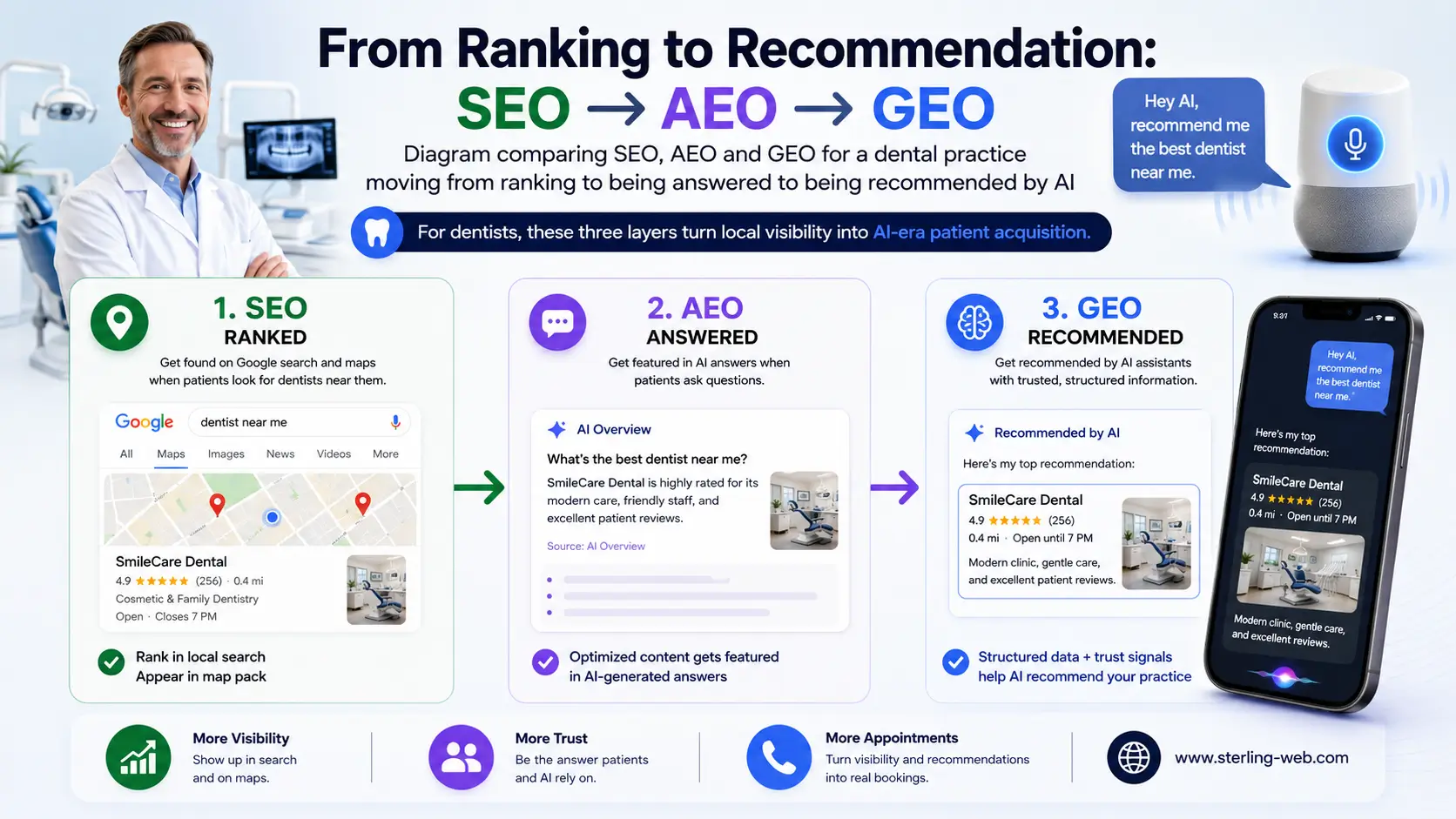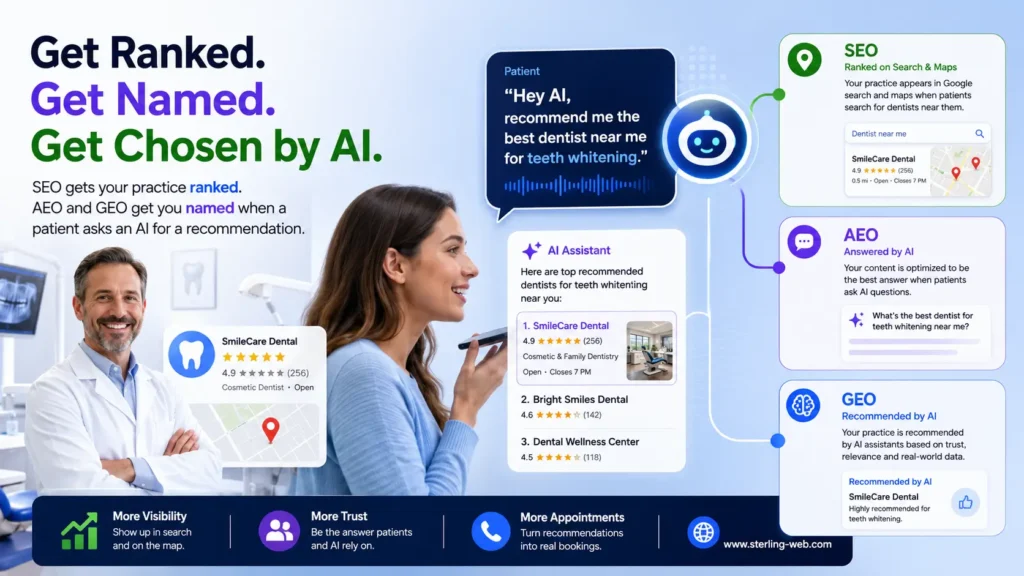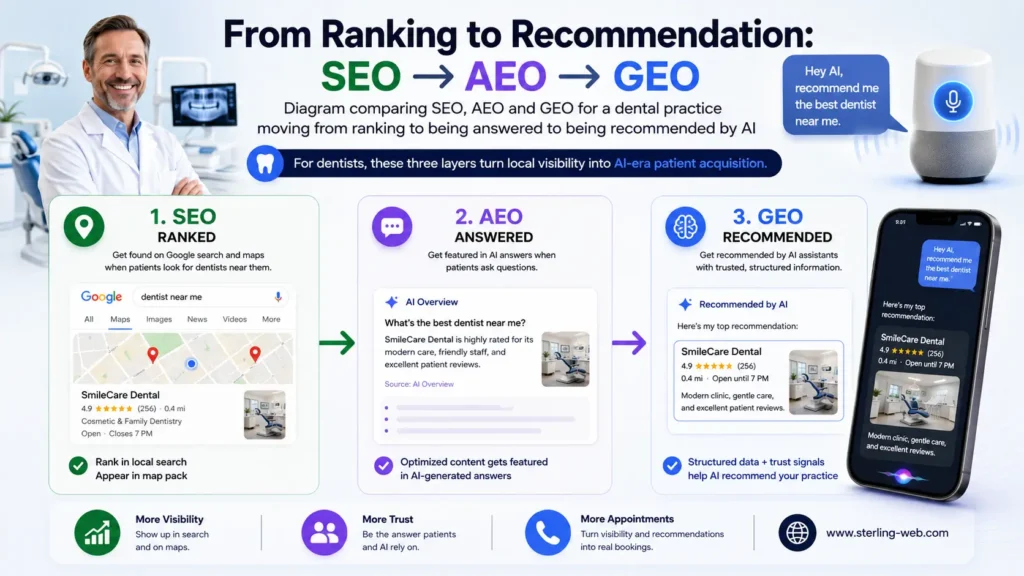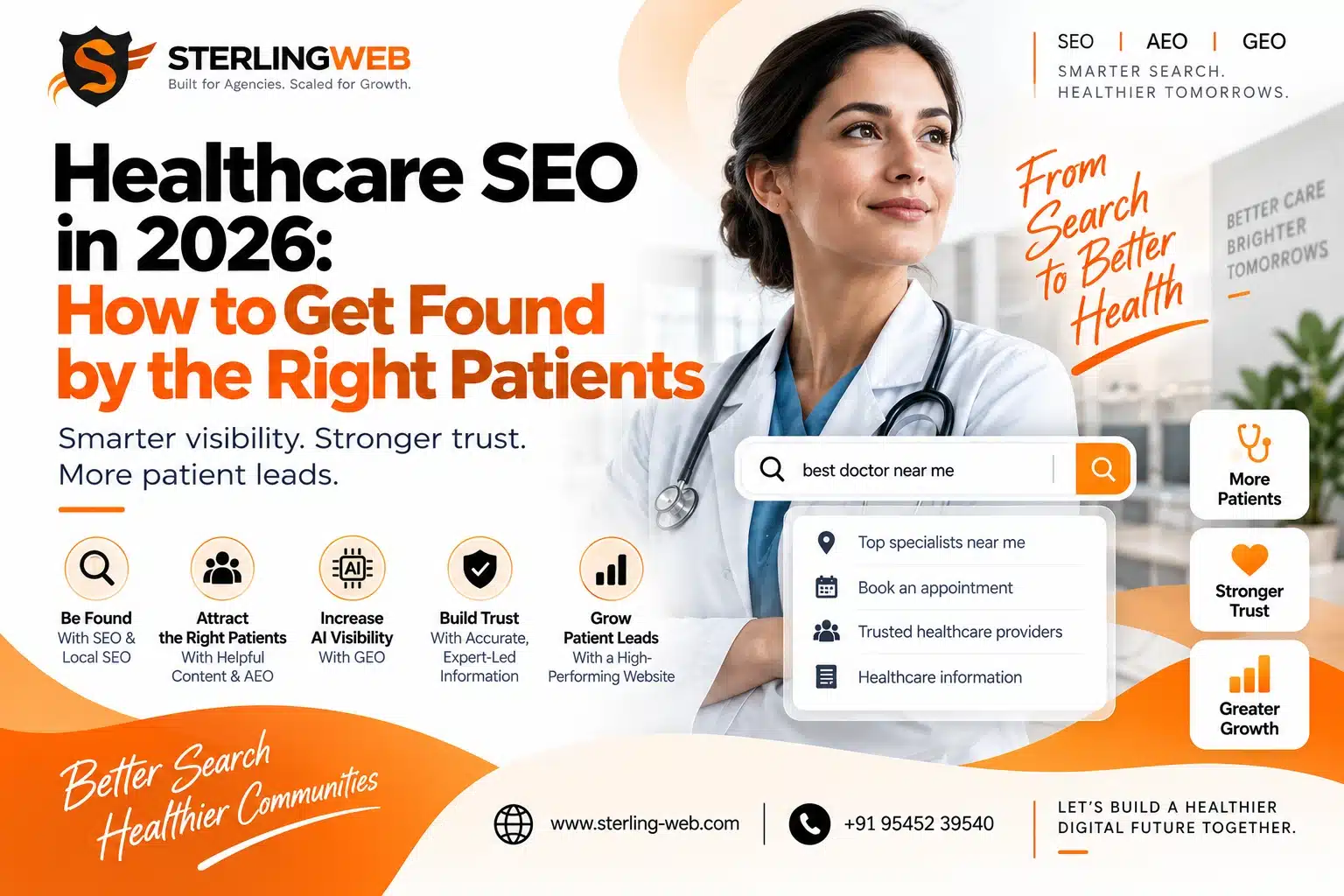
Healthcare SEO in 2026 is no longer just about ranking medical keywords and bringing more visitors to a website.
Patients increasingly use search to research symptoms, compare healthcare services, find nearby providers, evaluate credibility, and decide what to do next. At the same time, AI-powered search experiences are making search more conversational and helping users explore complex questions through follow-up queries.
For healthcare businesses, the objective is therefore broader: be discoverable, understandable, trustworthy, locally relevant, and easy for the right patient to act on.
Because healthcare falls within Google’s broader YMYL (Your Money or Your Life) category, Google says its systems place greater weight on content demonstrating strong E-E-A-T—experience, expertise, authoritativeness, and trustworthiness—for topics that can significantly affect people’s health or safety.
Quick Answer
A strong healthcare SEO strategy in 2026 combines:
- Technical SEO and a crawlable website
- Local SEO and accurate business information
- High-quality healthcare service pages
- Helpful, trustworthy content
- AEO for patient questions
- GEO for visibility across AI-powered search
- Strong provider and author information
- Good mobile experience and conversion UX
- Consistent healthcare brand information across the web
- Measurement beyond traditional keyword rankings
The goal isn’t simply to attract more traffic. It’s to make the healthcare organization easier to discover when someone is actually looking for the services, location, expertise, or information it provides.
Why Healthcare Search Is Changing in 2026
The traditional healthcare search journey often looked something like:
Google search → website → service page → contact form
That journey is becoming more complex.
Google has continued expanding AI Overviews and AI Mode, allowing people to ask follow-up questions and explore topics conversationally. Google also says AI Mode is designed to handle longer and more complex questions than traditional searches.
That changes the type of visibility healthcare organizations need.
A potential patient might search:
“What type of specialist should I see for this condition?”
Then:
“What should I look for when choosing a clinic?”
And eventually:
“Which healthcare providers offer this service near me?”
Each question represents a different stage of the decision journey.
Healthcare SEO therefore needs to address questions, services, locations, expertise, and trust—not just keywords.
Healthcare SEO Starts With Search Intent
One of the biggest mistakes in healthcare SEO is treating every search as a ranking opportunity for the same type of page.
Different searches represent different intentions.
Informational intent
Examples include:
- What is a particular condition?
- What are common treatment options?
- When should someone consult a specialist?
- What does a particular healthcare service involve?
These searches are usually better supported by educational content.
Service research
Examples:
- What does a physiotherapist do?
- How does a diagnostic service work?
- What happens during an initial consultation?
These searches can lead users toward service or provider pages.
Local and high-intent searches
Examples:
- Healthcare clinic near me
- Specialist in [location]
- [Service] clinic in [city]
- Book an appointment with [provider]
These searches require strong local signals, dedicated service pages, clear contact information, and an easy next step.
A successful strategy connects these different search intents instead of creating content simply because a keyword has search volume.
Build a Strong Technical SEO Foundation
AI search doesn’t eliminate technical SEO.
In fact, Google’s 2026 guidance specifically emphasizes that SEO fundamentals remain foundational for visibility in generative AI search. Google recommends ensuring that content is crawlable and accessible, while also maintaining good page experience and reducing unnecessary duplication.
For healthcare websites, that means paying attention to:
- Crawlability and indexation
- Website architecture
- Internal linking
- Canonical URLs
- XML sitemaps
- Mobile usability
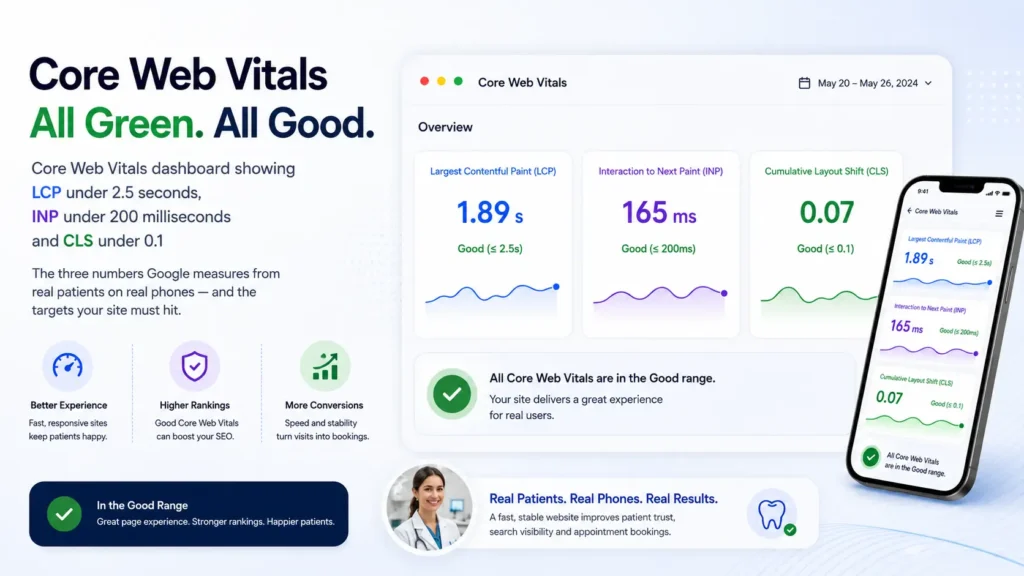
- Page speed
- Core Web Vitals
- Secure browsing
- JavaScript SEO
- Image optimization
- Duplicate content
- Structured data
Technical SEO may not be the most visible part of a healthcare marketing strategy, but it creates the foundation that allows search engines to discover and understand the website.
Create Dedicated Healthcare Service Pages
A healthcare organization shouldn’t rely on one generic “Services” page to explain everything it offers.
Important services should have dedicated pages that clearly explain:
- What the service is
- Who it is intended for
- What the provider offers
- What patients can expect
- Relevant locations
- Associated providers or specialists
- Frequently asked questions
- How to contact or book
This also gives search engines clearer context about the organization’s areas of expertise.
The focus should be usefulness rather than keyword repetition.
Instead of repeatedly inserting phrases such as “best healthcare service in [city],” explain the service properly and make the page genuinely useful to someone considering it.
Local SEO Is Critical for Healthcare Businesses
Healthcare is often highly location-dependent.
A patient searching for a clinic, specialist, hospital, diagnostic center, dentist, physiotherapist, or other provider usually needs to know where the service is available.
Local SEO should therefore clearly communicate:
- Business name
- Address
- Phone number
- Opening hours
- Locations
- Services
- Areas served
- Provider information
- Website
- Appointment/contact options
Google’s documentation explains that businesses can establish their official presence through Business Profile, Search Console, business details, and structured data, helping Google understand information about the organization across Search and Maps.
For healthcare organizations with multiple locations, each location should have genuinely useful information rather than simply duplicating the same page with a different city name.
Healthcare Content Needs a Higher Standard of Trust
This is where healthcare SEO differs significantly from many other industries.
A healthcare website shouldn’t simply publish content because a keyword appears to have potential.
The content needs to be accurate, responsible, useful, and transparent about who created or reviewed it.
Google specifically states that its systems give greater weight to strong E-E-A-T for topics that can significantly affect health, financial stability, safety, or well-being.
Healthcare websites can strengthen this trust by clearly showing:
- Author names
- Professional credentials where appropriate
- Medical reviewers when relevant
- Provider profiles
- Sources and references
- Editorial policies
- Publication or update dates
- Clear information about the organization
This isn’t about adding an “E-E-A-T badge.”
It’s about making the website’s expertise easier for both users and search systems to understand.
Don’t Let AI Replace Healthcare Expertise
AI can help healthcare marketing teams research topics, organize information, identify common questions, and create initial drafts.
But healthcare content requires a higher level of editorial responsibility.
A practical workflow can look like:
Research → Draft → Professional Review → Fact Check → Editorial Review → Publish
Google’s guidance emphasizes accuracy, quality, relevance, and people-first content rather than using AI simply to produce large amounts of search-focused material.
The objective should be to use AI where it improves efficiency without removing the expertise that makes healthcare information trustworthy.
AEO: Answer the Questions Patients Actually Ask
Answer Engine Optimization, or AEO, is particularly relevant to healthcare because patients often search in question-based language.
Instead of building content only around:
“Dermatologist Mumbai”
a healthcare website can also address questions such as:
- What does a dermatologist treat?
- When should I consult a dermatologist?
- What happens during a dermatology consultation?
- What should I bring to my first appointment?
- How can I find a dermatologist near me?
The important distinction is that AEO isn’t about creating artificial FAQ content just to appear in an answer box.
It is about making important information easy to find and understand.
Google’s current guidance also cautions against treating AEO or GEO as a collection of special hacks. Google describes generative AI search optimization as part of broader SEO and recommends continuing to apply foundational SEO practices.
GEO: Help AI Understand Your Healthcare Brand
Generative Engine Optimization, or GEO, focuses on how a brand, organization, service, or subject is understood and represented across generative search experiences.
For a healthcare organization, this means making important entities and relationships clear.
For example:
Organization → Healthcare services → Providers → Locations → Expertise → Supporting information
Your website should make it easy to understand:
- Who the organization is
- What healthcare services it provides
- Which professionals are associated with it
- Where services are available
- What areas of expertise it covers
- What makes its information or services relevant
This is not a guarantee that ChatGPT, Google AI features, Gemini, or another AI system will recommend a particular provider.
Instead, GEO should be viewed as part of a broader effort to make a healthcare organization’s identity, expertise, and relevance clearer across modern search environments.
Google’s own 2026 guidance notes that valuable, unique content and foundational SEO remain important for generative AI search.
Build a Consistent Healthcare Brand Across the Web
Your website is only one source of information about your organization.
Search systems can encounter information through:
- Google Business Profile
- Healthcare directories
- Professional profiles
- Local directories
- Review platforms
- Partner organizations
- Industry publications
- Social profiles
- Provider profiles
- Other authoritative websites
Important business information should remain consistent wherever possible.
This is particularly useful when establishing clear relationships between an organization, its professionals, services, and locations.
Google also recommends establishing official business details and using structured data to provide explicit clues about the meaning of website content.
Create Content Around the Patient Journey
Healthcare content shouldn’t become a collection of disconnected SEO articles.
Think about what a person needs at different stages.
Before choosing a provider
They may want to understand:
- The service
- Their options
- Relevant specialists
- Location
- Credentials
- What questions to ask
While researching
They may compare:
- Providers
- Services
- Treatment approaches
- Locations
- Reviews
- Appointment options
Before contacting the organization
They may want practical information such as:
- How to book
- What to bring
- Where to go
- What to expect
- How to contact the provider
This approach makes content useful beyond search rankings.
Website UX Can Influence What Happens After the Click
Getting visibility is only part of the process.
Once someone reaches a healthcare website, they should be able to understand what to do next.
Important actions should be easy to find:
Request Appointment | Call | Find Location | View Provider | Contact Us | Explore Services
This becomes especially important on mobile devices.
Google’s page-experience guidance recommends considering Core Web Vitals, secure pages, mobile usability, intrusive interstitials, and whether visitors can easily distinguish the main content from other elements on the page.
For healthcare websites, UX should therefore support both information discovery and patient action.
Use Structured Data Where It Makes Sense
Structured data can help search engines understand what a page represents.
Depending on the website, relevant types may include:
- Organization
- LocalBusiness
- Person
- Article
- Breadcrumb
- Event
For example, Google explains that LocalBusiness structured data can communicate information such as business details and operating hours.
But structured data shouldn’t be treated as an AI-ranking shortcut.
It should accurately describe information that is already present and relevant on the page.
Original Healthcare Information Matters More in AI Search
As search becomes more generative, simply rewriting information that already exists across hundreds of websites becomes less valuable.
Healthcare organizations have an opportunity to publish information based on their genuine expertise and experience.
That could include:
- Provider-authored resources
- Original service explanations
- Expert-reviewed educational guides
- Local healthcare information
- Detailed service FAQs
- Patient journey resources
- Original insights from healthcare professionals
Google’s current generative AI guidance emphasizes valuable, unique, non-commodity content rather than simply producing more content.
The opportunity is therefore not “create more AI content.”
It is “create information that is genuinely worth discovering.”
Measure More Than Traditional Rankings
Healthcare SEO reporting should go beyond positions for a handful of keywords.
SEO metrics
Track:
- Organic impressions
- Clicks
- Rankings
- Organic traffic
- Search visibility
- Landing-page performance
Website engagement
Look at:
- Service-page engagement
- Provider-page engagement
- Location-page engagement
- Mobile behavior
- Appointment-page activity
Lead-generation metrics
Connect SEO with business outcomes such as:
- Appointment requests
- Consultation enquiries
- Phone calls
- Contact submissions
- Location searches
- Qualified leads
AI search visibility
Where measurable, monitor:
- Brand mentions
- Relevant AI-search appearances
- Citations
- Questions where competitors appear
- AI referral traffic
- Visibility across important conversational queries
Google has also introduced dedicated Search Console reporting for visibility in generative AI features such as AI Overviews and AI Mode, making AI-search visibility increasingly measurable rather than purely theoretical.
SEO + AEO + GEO: A More Connected Healthcare Strategy
These areas shouldn’t be treated as completely separate strategies.
SEO helps make the website discoverable.
Local SEO helps connect healthcare services with relevant geographic searches.
AEO helps organize information around questions patients actually ask.
GEO focuses on making the organization, expertise, services, and relevance understandable across generative search experiences.
UX helps turn discovery into meaningful action.
The strongest approach is to connect all of them through one website and content strategy.
How SterlingWeb Approaches Healthcare Search Visibility
At SterlingWeb, our approach to healthcare search visibility connects traditional SEO with the changing search environment.
That means looking at:
- Technical SEO
- Local SEO
- Healthcare content strategy
- AEO
- GEO
- Structured data
- Website UX
- AI search visibility
- Conversion-focused optimization
The objective isn’t to chase every new AI trend.
It is to build a healthcare website that is technically accessible, genuinely useful, clearly structured, locally relevant, and easy for both people and modern search systems to understand.
Why This Matters
Healthcare search is becoming more conversational, more exploratory, and increasingly influenced by AI-powered experiences.
But the fundamentals haven’t disappeared.
Healthcare organizations still need strong technical foundations, useful content, clear expertise, local relevance, and a website experience that helps people take the next step.
What is changing is how those signals come together across the search journey.
The future of healthcare SEO isn’t simply about ranking for more medical keywords.
It’s about helping the right patients discover the right healthcare organization at the right moment—and giving them enough trustworthy information to move forward.
Final Takeaway
Healthcare SEO in 2026 is about visibility with context.
Technical SEO helps search engines access the website. Local SEO connects services with relevant locations. AEO addresses patient questions. GEO helps make the organization and its expertise understandable across AI-powered search.
When these elements work together, healthcare businesses can build a stronger search presence without relying on keyword stuffing, AI-generated volume, or short-term SEO tricks.
Want to improve your healthcare website’s search visibility and patient acquisition strategy? Explore SEO, AEO, GEO, and healthcare website optimization with SterlingWeb.
Sponsored options
Ad