Tag: technical seo optimization

  • Healthcare SEO in 2026: How to Get Found by the Right Patients

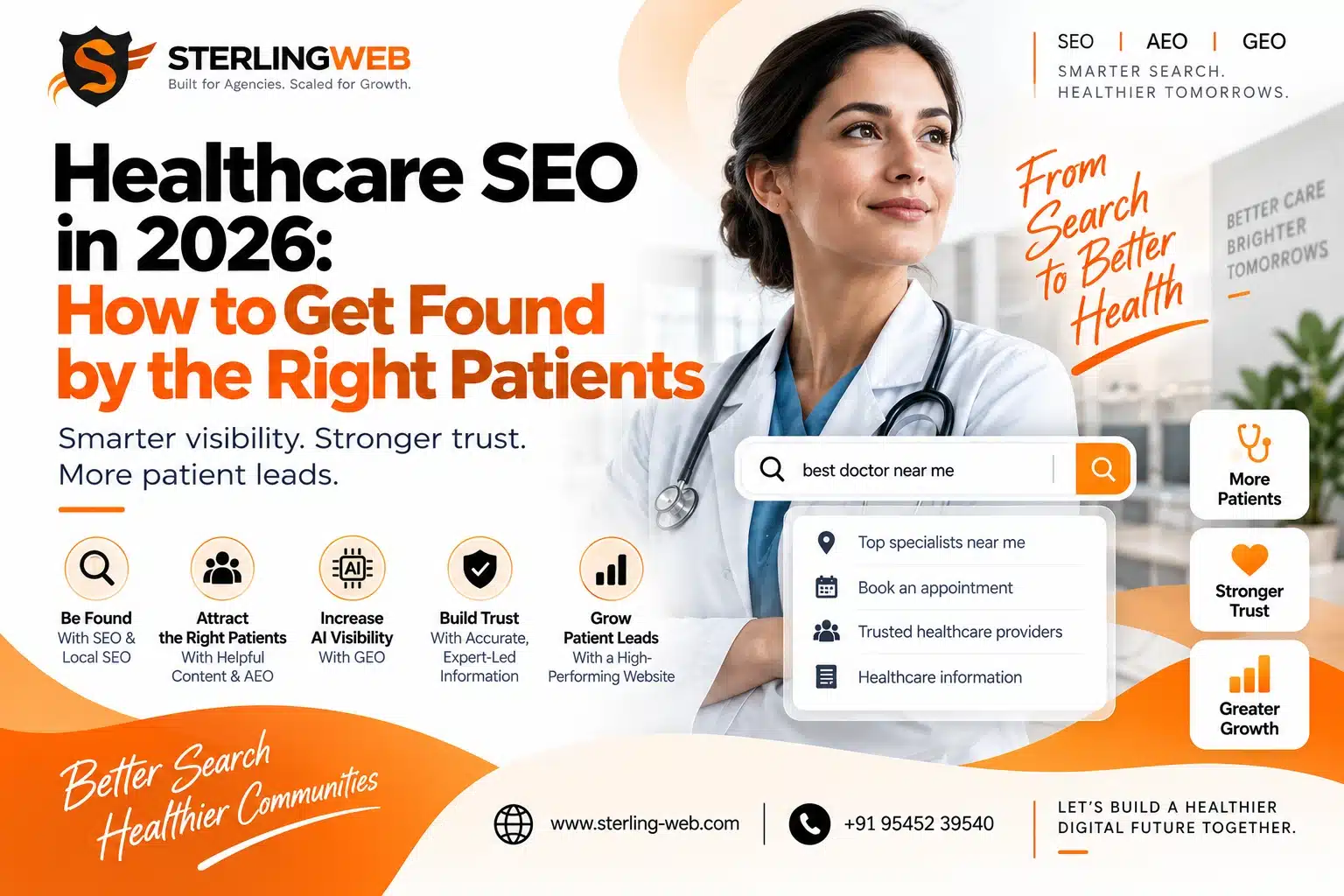
    Healthcare SEO in 2026: How to Get Found by the Right Patients

    Healthcare SEO in 2026 is no longer just about ranking medical keywords and bringing more visitors to a website.

    Patients increasingly use search to research symptoms, compare healthcare services, find nearby providers, evaluate credibility, and decide what to do next. At the same time, AI-powered search experiences are making search more conversational and helping users explore complex questions through follow-up queries.

    For healthcare businesses, the objective is therefore broader: be discoverable, understandable, trustworthy, locally relevant, and easy for the right patient to act on.

    Because healthcare falls within Google’s broader YMYL (Your Money or Your Life) category, Google says its systems place greater weight on content demonstrating strong E-E-A-T—experience, expertise, authoritativeness, and trustworthiness—for topics that can significantly affect people’s health or safety.

    Quick Answer

    A strong healthcare SEO strategy in 2026 combines:

    • Technical SEO and a crawlable website
    • Local SEO and accurate business information
    • High-quality healthcare service pages
    • Helpful, trustworthy content
    • AEO for patient questions
    • GEO for visibility across AI-powered search
    • Strong provider and author information
    • Good mobile experience and conversion UX
    • Consistent healthcare brand information across the web
    • Measurement beyond traditional keyword rankings

    The goal isn’t simply to attract more traffic. It’s to make the healthcare organization easier to discover when someone is actually looking for the services, location, expertise, or information it provides.


    Why Healthcare Search Is Changing in 2026

    The traditional healthcare search journey often looked something like:

    Google search → website → service page → contact form

    That journey is becoming more complex.

    Google has continued expanding AI Overviews and AI Mode, allowing people to ask follow-up questions and explore topics conversationally. Google also says AI Mode is designed to handle longer and more complex questions than traditional searches.

    That changes the type of visibility healthcare organizations need.

    A potential patient might search:

    “What type of specialist should I see for this condition?”

    Then:

    “What should I look for when choosing a clinic?”

    And eventually:

    “Which healthcare providers offer this service near me?”

    Each question represents a different stage of the decision journey.

    Healthcare SEO therefore needs to address questions, services, locations, expertise, and trust—not just keywords.


    Healthcare SEO Starts With Search Intent

    One of the biggest mistakes in healthcare SEO is treating every search as a ranking opportunity for the same type of page.

    Different searches represent different intentions.

    Informational intent

    Examples include:

    • What is a particular condition?
    • What are common treatment options?
    • When should someone consult a specialist?
    • What does a particular healthcare service involve?

    These searches are usually better supported by educational content.

    Service research

    Examples:

    • What does a physiotherapist do?
    • How does a diagnostic service work?
    • What happens during an initial consultation?

    These searches can lead users toward service or provider pages.

    Local and high-intent searches

    Examples:

    • Healthcare clinic near me
    • Specialist in [location]
    • [Service] clinic in [city]
    • Book an appointment with [provider]

    These searches require strong local signals, dedicated service pages, clear contact information, and an easy next step.

    A successful strategy connects these different search intents instead of creating content simply because a keyword has search volume.


    Build a Strong Technical SEO Foundation

    AI search doesn’t eliminate technical SEO.

    In fact, Google’s 2026 guidance specifically emphasizes that SEO fundamentals remain foundational for visibility in generative AI search. Google recommends ensuring that content is crawlable and accessible, while also maintaining good page experience and reducing unnecessary duplication.

    For healthcare websites, that means paying attention to:

    • Crawlability and indexation
    • Website architecture
    • Internal linking
    • Canonical URLs
    • XML sitemaps
    • Mobile usability
    • Page speed
    • Core Web Vitals
    • Secure browsing
    • JavaScript SEO
    • Image optimization
    • Duplicate content
    • Structured data

    Technical SEO may not be the most visible part of a healthcare marketing strategy, but it creates the foundation that allows search engines to discover and understand the website.


    Create Dedicated Healthcare Service Pages

    A healthcare organization shouldn’t rely on one generic “Services” page to explain everything it offers.

    Important services should have dedicated pages that clearly explain:

    • What the service is
    • Who it is intended for
    • What the provider offers
    • What patients can expect
    • Relevant locations
    • Associated providers or specialists
    • Frequently asked questions
    • How to contact or book

    This also gives search engines clearer context about the organization’s areas of expertise.

    The focus should be usefulness rather than keyword repetition.

    Instead of repeatedly inserting phrases such as “best healthcare service in [city],” explain the service properly and make the page genuinely useful to someone considering it.


    Local SEO Is Critical for Healthcare Businesses

    Healthcare is often highly location-dependent.

    A patient searching for a clinic, specialist, hospital, diagnostic center, dentist, physiotherapist, or other provider usually needs to know where the service is available.

    Local SEO should therefore clearly communicate:

    • Business name
    • Address
    • Phone number
    • Opening hours
    • Locations
    • Services
    • Areas served
    • Provider information
    • Website
    • Appointment/contact options

    Google’s documentation explains that businesses can establish their official presence through Business Profile, Search Console, business details, and structured data, helping Google understand information about the organization across Search and Maps.

    For healthcare organizations with multiple locations, each location should have genuinely useful information rather than simply duplicating the same page with a different city name.


    Healthcare Content Needs a Higher Standard of Trust

    This is where healthcare SEO differs significantly from many other industries.

    A healthcare website shouldn’t simply publish content because a keyword appears to have potential.

    The content needs to be accurate, responsible, useful, and transparent about who created or reviewed it.

    Google specifically states that its systems give greater weight to strong E-E-A-T for topics that can significantly affect health, financial stability, safety, or well-being.

    Healthcare websites can strengthen this trust by clearly showing:

    • Author names
    • Professional credentials where appropriate
    • Medical reviewers when relevant
    • Provider profiles
    • Sources and references
    • Editorial policies
    • Publication or update dates
    • Clear information about the organization

    This isn’t about adding an “E-E-A-T badge.”

    It’s about making the website’s expertise easier for both users and search systems to understand.


    Don’t Let AI Replace Healthcare Expertise

    AI can help healthcare marketing teams research topics, organize information, identify common questions, and create initial drafts.

    But healthcare content requires a higher level of editorial responsibility.

    A practical workflow can look like:

    Research → Draft → Professional Review → Fact Check → Editorial Review → Publish

    Google’s guidance emphasizes accuracy, quality, relevance, and people-first content rather than using AI simply to produce large amounts of search-focused material.

    The objective should be to use AI where it improves efficiency without removing the expertise that makes healthcare information trustworthy.


    AEO: Answer the Questions Patients Actually Ask

    Answer Engine Optimization, or AEO, is particularly relevant to healthcare because patients often search in question-based language.

    Instead of building content only around:

    “Dermatologist Mumbai”

    a healthcare website can also address questions such as:

    • What does a dermatologist treat?
    • When should I consult a dermatologist?
    • What happens during a dermatology consultation?
    • What should I bring to my first appointment?
    • How can I find a dermatologist near me?

    The important distinction is that AEO isn’t about creating artificial FAQ content just to appear in an answer box.

    It is about making important information easy to find and understand.

    Google’s current guidance also cautions against treating AEO or GEO as a collection of special hacks. Google describes generative AI search optimization as part of broader SEO and recommends continuing to apply foundational SEO practices.


    GEO: Help AI Understand Your Healthcare Brand

    Generative Engine Optimization, or GEO, focuses on how a brand, organization, service, or subject is understood and represented across generative search experiences.

    For a healthcare organization, this means making important entities and relationships clear.

    For example:

    Organization → Healthcare services → Providers → Locations → Expertise → Supporting information

    Your website should make it easy to understand:

    • Who the organization is
    • What healthcare services it provides
    • Which professionals are associated with it
    • Where services are available
    • What areas of expertise it covers
    • What makes its information or services relevant

    This is not a guarantee that ChatGPT, Google AI features, Gemini, or another AI system will recommend a particular provider.

    Instead, GEO should be viewed as part of a broader effort to make a healthcare organization’s identity, expertise, and relevance clearer across modern search environments.

    Google’s own 2026 guidance notes that valuable, unique content and foundational SEO remain important for generative AI search.


    Build a Consistent Healthcare Brand Across the Web

    Your website is only one source of information about your organization.

    Search systems can encounter information through:

    • Google Business Profile
    • Healthcare directories
    • Professional profiles
    • Local directories
    • Review platforms
    • Partner organizations
    • Industry publications
    • Social profiles
    • Provider profiles
    • Other authoritative websites

    Important business information should remain consistent wherever possible.

    This is particularly useful when establishing clear relationships between an organization, its professionals, services, and locations.

    Google also recommends establishing official business details and using structured data to provide explicit clues about the meaning of website content.


    Create Content Around the Patient Journey

    Healthcare content shouldn’t become a collection of disconnected SEO articles.

    Think about what a person needs at different stages.

    Before choosing a provider

    They may want to understand:

    • The service
    • Their options
    • Relevant specialists
    • Location
    • Credentials
    • What questions to ask

    While researching

    They may compare:

    • Providers
    • Services
    • Treatment approaches
    • Locations
    • Reviews
    • Appointment options

    Before contacting the organization

    They may want practical information such as:

    • How to book
    • What to bring
    • Where to go
    • What to expect
    • How to contact the provider

    This approach makes content useful beyond search rankings.


    Website UX Can Influence What Happens After the Click

    Getting visibility is only part of the process.

    Once someone reaches a healthcare website, they should be able to understand what to do next.

    Important actions should be easy to find:

    Request Appointment | Call | Find Location | View Provider | Contact Us | Explore Services

    This becomes especially important on mobile devices.

    Google’s page-experience guidance recommends considering Core Web Vitals, secure pages, mobile usability, intrusive interstitials, and whether visitors can easily distinguish the main content from other elements on the page.

    For healthcare websites, UX should therefore support both information discovery and patient action.


    Use Structured Data Where It Makes Sense

    Structured data can help search engines understand what a page represents.

    Depending on the website, relevant types may include:

    • Organization
    • LocalBusiness
    • Person
    • Article
    • Breadcrumb
    • Event

    For example, Google explains that LocalBusiness structured data can communicate information such as business details and operating hours.

    But structured data shouldn’t be treated as an AI-ranking shortcut.

    It should accurately describe information that is already present and relevant on the page.


    Original Healthcare Information Matters More in AI Search

    As search becomes more generative, simply rewriting information that already exists across hundreds of websites becomes less valuable.

    Healthcare organizations have an opportunity to publish information based on their genuine expertise and experience.

    That could include:

    • Provider-authored resources
    • Original service explanations
    • Expert-reviewed educational guides
    • Local healthcare information
    • Detailed service FAQs
    • Patient journey resources
    • Original insights from healthcare professionals

    Google’s current generative AI guidance emphasizes valuable, unique, non-commodity content rather than simply producing more content.

    The opportunity is therefore not “create more AI content.”

    It is “create information that is genuinely worth discovering.”


    Measure More Than Traditional Rankings

    Healthcare SEO reporting should go beyond positions for a handful of keywords.

    SEO metrics

    Track:

    • Organic impressions
    • Clicks
    • Rankings
    • Organic traffic
    • Search visibility
    • Landing-page performance

    Website engagement

    Look at:

    • Service-page engagement
    • Provider-page engagement
    • Location-page engagement
    • Mobile behavior
    • Appointment-page activity

    Lead-generation metrics

    Connect SEO with business outcomes such as:

    • Appointment requests
    • Consultation enquiries
    • Phone calls
    • Contact submissions
    • Location searches
    • Qualified leads

    AI search visibility

    Where measurable, monitor:

    • Brand mentions
    • Relevant AI-search appearances
    • Citations
    • Questions where competitors appear
    • AI referral traffic
    • Visibility across important conversational queries

    Google has also introduced dedicated Search Console reporting for visibility in generative AI features such as AI Overviews and AI Mode, making AI-search visibility increasingly measurable rather than purely theoretical.


    SEO + AEO + GEO: A More Connected Healthcare Strategy

    These areas shouldn’t be treated as completely separate strategies.

    SEO helps make the website discoverable.

    Local SEO helps connect healthcare services with relevant geographic searches.

    AEO helps organize information around questions patients actually ask.

    GEO focuses on making the organization, expertise, services, and relevance understandable across generative search experiences.

    UX helps turn discovery into meaningful action.

    The strongest approach is to connect all of them through one website and content strategy.


    How SterlingWeb Approaches Healthcare Search Visibility

    At SterlingWeb, our approach to healthcare search visibility connects traditional SEO with the changing search environment.

    That means looking at:

    • Technical SEO
    • Local SEO
    • Healthcare content strategy
    • AEO
    • GEO
    • Structured data
    • Website UX
    • AI search visibility
    • Conversion-focused optimization

    The objective isn’t to chase every new AI trend.

    It is to build a healthcare website that is technically accessible, genuinely useful, clearly structured, locally relevant, and easy for both people and modern search systems to understand.


    Why This Matters

    Healthcare search is becoming more conversational, more exploratory, and increasingly influenced by AI-powered experiences.

    But the fundamentals haven’t disappeared.

    Healthcare organizations still need strong technical foundations, useful content, clear expertise, local relevance, and a website experience that helps people take the next step.

    What is changing is how those signals come together across the search journey.

    The future of healthcare SEO isn’t simply about ranking for more medical keywords.

    It’s about helping the right patients discover the right healthcare organization at the right moment—and giving them enough trustworthy information to move forward.

    Final Takeaway

    Healthcare SEO in 2026 is about visibility with context.

    Technical SEO helps search engines access the website. Local SEO connects services with relevant locations. AEO addresses patient questions. GEO helps make the organization and its expertise understandable across AI-powered search.

    When these elements work together, healthcare businesses can build a stronger search presence without relying on keyword stuffing, AI-generated volume, or short-term SEO tricks.

    Want to improve your healthcare website’s search visibility and patient acquisition strategy? Explore SEO, AEO, GEO, and healthcare website optimization with SterlingWeb.

    Visit SterlingWeb

    Sponsored options

    Ad

  • Real Estate SEO in 2026: How to Get Found by the Right Buyers

    Real Estate SEO in 2026: How to Get Found by the Right Buyers

    Real estate SEO is no longer just about ranking property pages on Google.

    Buyers now research properties through multiple digital touchpoints. They search for neighborhoods, compare property types, investigate prices, read reviews, and ask increasingly detailed questions through AI-powered search experiences.

    This changes what a successful SEO strategy should accomplish.

    The goal isn’t simply more traffic.

    It’s visibility among people who have genuine interest and intent—and a website experience that helps those visitors move toward an enquiry.


    Quick Answer

    A strong real estate SEO strategy in 2026 should bring together:

    Technical SEO — Make the website crawlable, indexable, fast, and easy to navigate.

    Local SEO — Build visibility for relevant cities, neighborhoods, and service areas.

    Property SEO — Optimize property and listing pages around specific search intent.

    Content & AEO — Answer the questions buyers, sellers, renters, and investors actually ask.

    GEO — Strengthen how the real estate business and its expertise are understood across AI-powered search.

    Conversion optimization — Make it easy for relevant visitors to request information, schedule viewings, call an agent, or enquire.


    Why Real Estate Search Is Changing

    A property search rarely begins and ends with one query.

    Someone might start with:

    “Homes for sale in [city]”

    Then their research can evolve into:

    “Which neighborhoods are good for families?”

    Then:

    “What should I look for when buying a home in this area?”

    And eventually:

    “Which real estate companies specialize in this type of property?”

    AI-powered search is making these conversational journeys increasingly important. Google’s current AI Search experiences support longer questions, follow-ups, comparisons, and deeper exploration of information.

    For real estate businesses, this means there are more opportunities to become visible before a buyer reaches the final enquiry stage.


    Start With Search Intent, Not Just Keywords

    Real estate SEO can become ineffective when every page is built around a keyword without understanding the person’s intent.

    Consider the difference between:

    “Real estate”

    and:

    “2-bedroom apartments for sale in [specific neighborhood]”

    The second query tells you considerably more about the searcher’s needs.

    A useful strategy considers different types of intent.

    Informational Intent

    People looking for knowledge:

    • How does the home-buying process work?
    • What should first-time buyers know?
    • What makes a neighborhood suitable for families?

    Research Intent

    People comparing options:

    • Best neighborhoods for buying a home
    • Apartment vs. house
    • Property investment areas
    • Neighborhood comparisons

    High-Intent Searches

    People closer to taking action:

    • Homes for sale in [location]
    • Apartments for rent in [location]
    • Luxury properties in [location]
    • Real estate agent near me

    The opportunity is to create a connected content journey across these different intents.


    Optimize Property Pages for People First

    Property pages are at the heart of a real estate website.

    But a page shouldn’t simply contain photographs, a price, and a contact button.

    It should clearly communicate the information a potential buyer needs.

    Important details can include:

    • Property type
    • Location
    • Price
    • Bedrooms and bathrooms
    • Property size
    • Features
    • Availability
    • Amenities
    • Neighborhood information
    • Agent information
    • Enquiry options

    Use clear headings and descriptive page titles so both visitors and search engines can understand the page quickly.

    Relevant structured data can also help search engines interpret specific information about a page when implemented correctly.

    The principle is simple:

    Make the property easy to understand before trying to make it rank.


    Local SEO Is at the Core of Real Estate Visibility

    Real estate is inherently local.

    A person isn’t generally searching for a property without a location in mind.

    They’re looking for:

    City → Neighborhood → Community → Property

    That makes local SEO particularly important.

    A real estate business should develop useful location-focused content around the markets it actually serves.

    This could include:

    • City pages
    • Neighborhood guides
    • Local property pages
    • Community resources
    • Area comparisons
    • Local buyer guides

    But every location page should have a reason to exist.

    Simply creating dozens of pages with the same content and changing the location name isn’t a sustainable local SEO strategy.


    Create Neighborhood Content That Helps Buyers

    Property listings capture people who already know what they want.

    Neighborhood content can capture people who are still deciding where they want to live or invest.

    For example:

    Living in [Neighborhood]: What Buyers Should Know

    A useful guide might discuss:

    • Property types
    • Local amenities
    • Transportation
    • Lifestyle considerations
    • Nearby communities
    • Who the area may suit
    • Questions buyers should consider

    This gives the real estate business an opportunity to demonstrate local knowledge.

    It can also create internal linking opportunities between neighborhood content and relevant property listings.


    AEO: Answer the Questions Behind the Search

    Real estate customers have questions throughout the buying journey.

    This is where Answer Engine Optimization (AEO) becomes valuable.

    Rather than creating content around keywords alone, identify the questions customers actually ask.

    For example:

    What should first-time buyers look for during a property viewing?

    How do I compare two neighborhoods?

    What questions should I ask a real estate agent?

    What factors should I consider before buying an investment property?

    A well-structured answer can help both users and modern search systems understand the subject.

    The goal isn’t to manipulate an answer engine.

    It’s to provide genuinely useful information in a clear format.


    GEO: Preparing for AI-Powered Property Discovery

    Generative Engine Optimization, or GEO, adds another dimension to real estate search visibility.

    Imagine someone asks an AI-powered search experience:

    “Which real estate agencies specialize in luxury properties in this area?”

    Or:

    “What neighborhoods should I consider if I want a family-friendly community?”

    The resulting answer can synthesize information from multiple sources.

    This makes brand clarity increasingly important.

    A real estate business should make it easy to understand:

    • Who the company is
    • Where it operates
    • What properties it specializes in
    • Who its customers are
    • What services it provides
    • What expertise it has

    GEO isn’t about guaranteeing a recommendation.

    It’s about creating a stronger and clearer digital presence that can be understood across generative search environments.


    Your Website Isn’t Your Only Search Asset

    A real estate brand can appear across many parts of the web:

    • Property portals
    • Business profiles
    • Reviews
    • Local directories
    • Industry publications
    • Social platforms
    • Partner websites
    • Local media

    This makes consistency important.

    Business names, locations, services, agent information, and other important details should be accurate across relevant platforms.

    A consistent digital presence can help reinforce the identity and context surrounding the business.


    Build Topical Authority Around Real Estate

    A real estate website shouldn’t rely entirely on property listings to demonstrate expertise.

    It can create useful resources around the topics its audience cares about.

    For example:

    Buying a Property

    → First-time buyer guides
    → Property viewing checklists
    → Financing questions
    → Neighborhood comparisons

    Selling a Property

    → Preparing a property for sale
    → Seller guides
    → Valuation considerations
    → Marketing resources

    Local Expertise

    → Neighborhood guides
    → Community information
    → Property trends
    → Area comparisons

    This creates a connected information ecosystem rather than a collection of isolated blog posts.


    Don’t Ignore Technical SEO

    AI search doesn’t eliminate traditional SEO fundamentals.

    Google continues to emphasize that established SEO practices remain relevant to its generative AI search experiences. Websites still need to be accessible, indexable, technically sound, and supported by useful content.

    For real estate websites, technical SEO should cover areas such as:

    • Crawlability
    • Indexation
    • Internal linking
    • Canonical URLs
    • Mobile usability
    • Page speed
    • Image optimization
    • XML sitemaps
    • Structured data
    • Clean site architecture

    This is especially important for large property websites where thousands of listing pages can create crawling and indexing challenges.


    Real Estate Images Are Part of the Experience

    Property search is highly visual.

    Images can help buyers understand a property before they contact an agent.

    But large property galleries can also create performance problems if they’re not optimized.

    Consider:

    • Appropriate image compression
    • Responsive images
    • Descriptive filenames
    • Useful alt text
    • Efficient image delivery
    • Organized galleries

    The objective is to balance visual quality with website performance.


    Website Design Can Determine Whether SEO Traffic Converts

    Getting someone to a property page is only the beginning.

    The website should make the next action obvious.

    For example:

    View Property → Request Details → Schedule Viewing → Contact Agent

    Useful conversion elements may include:

    • Clear enquiry forms
    • Click-to-call buttons
    • Viewing requests
    • Agent contact information
    • Property enquiry buttons
    • Mobile-friendly navigation
    • Easy access to location information

    A visitor shouldn’t have to navigate through multiple pages just to find out how to contact the business.


    Stop Measuring SEO Only by Traffic

    More traffic isn’t automatically better traffic.

    A real estate website receiving visitors who have no interest in its properties may generate impressive analytics but little business value.

    Instead, connect SEO reporting to meaningful actions.

    Search Visibility

    • Rankings
    • Impressions
    • Clicks
    • Organic traffic
    • Local visibility

    Website Engagement

    • Property page views
    • Listing interactions
    • Location-page engagement
    • Returning visitors

    Lead Generation

    • Enquiry forms
    • Phone calls
    • Viewing requests
    • Agent enquiries
    • Qualified leads

    AI Search Visibility

    Where measurable:

    • AI brand mentions
    • Citations
    • Visibility for important customer questions
    • Competitor appearances
    • AI referral traffic

    Google has also expanded reporting around generative AI search experiences, making AI-related visibility increasingly measurable alongside traditional search performance.


    SEO + AEO + GEO: A More Complete Real Estate Strategy

    These strategies don’t need to operate separately.

    They can support different stages of the same customer journey.

    SEO

    Be discoverable.

    Build the technical and content foundation for traditional search.

    Local SEO

    Be relevant to the right location.

    Connect your business with the markets and communities you serve.

    AEO

    Be useful.

    Answer the questions your customers ask.

    GEO

    Be understandable across AI search.

    Strengthen how your brand, expertise, and services are represented in generative search environments.

    Conversion Optimization

    Make the next step easy.

    Turn relevant interest into enquiries.


    What Real Estate Businesses Should Focus on in 2026

    A modern real estate SEO strategy should prioritize quality of visibility over quantity of traffic.

    That means asking:

    Are we appearing for the right searches?

    Are our property pages useful?

    Can buyers understand our locations and expertise?

    Are we answering questions before customers contact us?

    Can AI-powered search understand our business?

    Can visitors easily take the next step?

    These questions provide a much more useful framework than simply asking whether organic traffic increased this month.


    How SterlingWeb Approaches Real Estate SEO

    At SterlingWeb, the approach to modern search visibility connects SEO with AEO and GEO rather than treating them as isolated activities.

    For real estate businesses, this means looking at the complete search journey:

    Technical SEO for crawlability, indexation, performance, and site architecture.

    Local SEO for city, neighborhood, and service-area visibility.

    Content & AEO for answering real buyer questions.

    GEO for strengthening brand understanding across AI-powered search.

    Website UX for turning relevant visitors into meaningful enquiries.

    The objective isn’t simply to increase the number of people visiting a website.

    It’s to build a digital presence that helps the right buyers find the right information at the right time.


    Why This Matters

    Real estate customers research before they enquire.

    They search for properties.

    They investigate neighborhoods.

    They compare options.

    They ask questions.

    They look for businesses they can trust.

    And increasingly, AI-powered search can become part of that research journey.

    Google’s current Search developments reflect a broader move toward conversational exploration and AI-assisted discovery while continuing to connect users with relevant websites and content.

    For real estate businesses, this means SEO should no longer be viewed simply as a way to generate website traffic.

    It should be part of a broader property discovery and lead-generation strategy.


    Final Takeaway

    Real estate SEO in 2026 is about being found by the right buyers—not simply being found by more people.

    Technical SEO creates the foundation.

    Local SEO builds location relevance.

    Useful content supports research.

    AEO answers customer questions.

    GEO expands visibility across AI-powered search.

    And conversion-focused design turns relevant visitors into enquiries.

    The future of real estate search isn’t just about ranking higher.

    It’s about becoming visible, useful, relevant, and easy to engage with throughout the buyer journey.

    Want to improve your real estate website’s search visibility and lead-generation potential? Explore SEO, AEO, and GEO strategies with SterlingWeb.

  • Why AI Search Can’t Find Your Website: 7 Common Reasons

    Search is changing.

    People are no longer relying only on traditional Google results. They are increasingly asking AI-powered search experiences questions and expecting direct, summarized answers.

    That creates a new challenge for businesses:

    Your website can rank in traditional search and still have limited visibility in AI-generated answers.

    AI search systems need to be able to discover, access, understand, and evaluate your content. Google says its AI search experiences continue to rely on fundamental SEO practices such as crawlability, indexability, helpful content, and good page experience.

    Similarly, OpenAI says public websites can appear in ChatGPT Search, but site owners should ensure that OAI-SearchBot isn’t blocked if they want their content to be discoverable and potentially cited.

    So, why might AI search not be finding your website?

    Here are 7 common reasons—and what you can do about them.


    1. Search Crawlers Can’t Access Your Website

    The first problem is simple: AI can’t use content it can’t access.

    Your website may have:

    • A restrictive robots.txt file
    • Pages blocked from crawling
    • noindex directives
    • Firewall or CDN restrictions
    • Bot protection blocking legitimate crawlers
    • Login requirements
    • Server errors
    • Poorly configured security rules

    For ChatGPT Search, OpenAI specifically recommends allowing OAI-SearchBot to crawl your website.

    Google similarly recommends ensuring that Googlebot can access your pages, that pages return successful HTTP responses, and that their content is indexable.

    How to fix it

    Perform a technical crawl and check:

    • robots.txt
    • Meta robots
    • HTTP status codes
    • Canonical tags
    • XML sitemap
    • Server accessibility
    • CDN/WAF rules
    • Google Search Console indexing reports

    Also verify that legitimate AI crawlers aren’t accidentally being blocked by your security configuration.


    2. Your Content Isn’t Clearly Answering Search Intent

    AI search isn’t simply looking for pages stuffed with keywords.

    It needs content that clearly answers the user’s question.

    For example, a page targeting:

    Shopify SEO services India

    shouldn’t simply repeat that phrase throughout the page.

    It should explain:

    • What Shopify SEO is
    • Why Shopify stores need SEO
    • What services are included
    • Technical Shopify SEO problems
    • Content and keyword strategy
    • Internal linking
    • Structured data
    • Expected outcomes
    • Frequently asked questions

    Google recommends creating unique, useful content that satisfies people’s needs rather than producing generic content designed primarily for search engines.

    How to fix it

    Structure your content around real questions and user intent.

    Use:

    • Clear headings
    • Concise answers
    • Supporting explanations
    • Relevant examples
    • FAQs
    • Original insights
    • Expert experience
    • Useful statistics and evidence

    Think beyond:

    “How do I rank this keyword?”

    Instead ask:

    “Would an AI system consider this page a useful source for answering the user’s question?”


    3. Your Website Has Weak Topical Authority

    One isolated blog post rarely establishes strong expertise around a competitive subject.

    Imagine your company offers AI SEO services, but your website has only one article about AI SEO.

    Meanwhile, competitors have dozens of interconnected resources covering:

    • AI SEO
    • AEO
    • GEO
    • ChatGPT Search
    • Google AI Overviews
    • AI citations
    • Entity optimization
    • Structured data
    • Technical SEO
    • Content optimization

    The competitor has created a much stronger topic ecosystem.

    How to fix it

    Build topic clusters.

    For example:

    Pillar Page:
    AI SEO Services

    Supporting Content:

    • What Is AI SEO?
    • How Does AI Search Work?
    • ChatGPT SEO Guide
    • Google AI Overviews Optimization
    • AEO vs GEO vs SEO
    • How to Improve AI Search Visibility
    • How AI Search Citations Work
    • Technical SEO for AI Search

    Then connect these pages through strategic internal links.

    This helps search engines—and users—understand the relationship between your content.


    4. Your Content Lacks Original Information

    AI-generated content is everywhere.

    That means generic content is becoming increasingly difficult to differentiate.

    Publishing another article that says:

    “SEO is important for your business because it increases visibility and traffic.”

    doesn’t provide much unique value.

    Google’s guidance says generative AI can be useful, but automatically generating many pages without adding value can fall under its scaled content abuse policies. Google recommends focusing on accuracy, quality, relevance, and original value.

    How to fix it

    Add information that competitors don’t have.

    For example:

    • Original research
    • Client case studies
    • First-hand experience
    • Expert opinions
    • Industry statistics
    • Screenshots
    • Unique examples
    • Original frameworks
    • Data analysis
    • Real-world results

    Don’t just create more content. Create more useful content.


    5. Your Website Structure Makes Important Content Difficult to Discover

    AI search systems need to discover your content before they can potentially use it.

    A page buried several clicks deep with weak internal linking may be harder to discover and understand.

    Common problems include:

    • Orphan pages
    • Poor navigation
    • Weak internal linking
    • Inconsistent URL structures
    • Excessive pagination
    • Important pages buried deep within the site
    • No clear topical hierarchy

    How to fix it

    Create a logical website architecture.

    For example:

    SEO Services
    → Technical SEO
    → AI SEO
    → AEO
    → GEO
    → Local SEO

    Then connect related service pages and supporting content through contextual internal links.

    Your internal linking should help users—and search systems—understand:

    What is this page about?
    How is it related to other pages?
    Which page is the main authority on this topic?


    6. Your Structured Data Is Missing or Poorly Implemented

    Structured data helps communicate information about a webpage in a machine-readable format.

    Depending on the page, relevant schema may include:

    • Organization
    • LocalBusiness
    • Article
    • BreadcrumbList
    • Product
    • Service
    • FAQPage
    • ProfilePage

    However, schema isn’t a magic ranking button.

    Google recommends that structured data accurately represent the visible content on the page and that markup be validated. It also notes that structured data does not guarantee a particular search feature will appear.

    How to fix it

    Audit your structured data for:

    • Incorrect properties
    • Missing required fields
    • Invalid JSON-LD
    • Contradictions with visible content
    • Duplicate schema
    • Outdated information

    Most importantly:

    Don’t add schema simply because it exists. Add relevant, accurate schema that represents the page.


    7. You’re Optimizing for Rankings—but Not AI Visibility

    This may be the biggest strategic mistake.

    Traditional SEO often focuses on:

    Rank → Click → Visit

    AI search introduces another layer:

    Search → AI Answer → Brand Mention/Citation → Website Visit

    Your website therefore needs to be discoverable and useful not only for traditional rankings but also for AI-driven search experiences.

    Google says its AI search experiences continue to rely on core SEO fundamentals, while OpenAI says ChatGPT Search uses web sources and allows public websites to appear in results.

    How to fix it

    Start tracking AI visibility alongside traditional SEO.

    Monitor:

    • Google AI Overviews
    • Google AI Mode
    • ChatGPT Search
    • Perplexity
    • Gemini
    • Brand mentions
    • AI citations
    • Referral traffic
    • Important commercial queries

    Google has also begun rolling out dedicated Search Console reporting for visibility from generative AI features, including AI Overviews and AI Mode, although the rollout is currently limited to a subset of websites.


    How to Make Your Website More Visible in AI Search

    There isn’t a single “AI SEO trick.”

    Instead, build a strong foundation.

    AI Search Optimization Checklist

    Technical SEO

    • Make important pages crawlable
    • Fix indexing problems
    • Check robots.txt
    • Review noindex directives
    • Fix broken links
    • Maintain a clean sitemap
    • Improve page experience

    Content

    • Answer specific user questions
    • Match search intent
    • Create original content
    • Demonstrate expertise
    • Add examples and evidence
    • Update outdated information

    Website Architecture

    • Build topic clusters
    • Improve internal linking
    • Fix orphan pages
    • Create clear content hierarchy

    Structured Data

    • Implement relevant schema
    • Validate structured data
    • Keep markup consistent with visible content

    AI Visibility

    • Monitor AI search results
    • Track brand mentions
    • Track citations
    • Analyze competitor visibility
    • Optimize content based on AI-search opportunities

    SEO vs AI Search Optimization

    Traditional SEOAI Search Optimization
    Keyword rankingsAI visibility
    Organic clicksCitations & mentions
    SERP positionsInclusion in AI answers
    Search intentConversational intent
    BacklinksAuthority & source credibility
    On-page SEOMachine-readable, answer-focused content
    Search trafficSearch + AI referral traffic

    The two strategies aren’t competitors.

    Strong technical SEO remains the foundation of AI search visibility.


    Final Thoughts

    If your website isn’t appearing in AI search, don’t immediately assume you need hundreds of new articles or thousands of backlinks.

    Start with the fundamentals.

    Can AI crawlers access your website?

    Can search engines index your important pages?

    Does your content provide unique value?

    Does your website demonstrate expertise?

    Is your content organized around real questions and topics?

    Can search systems clearly understand your pages and entities?

    Are you actually measuring AI visibility?

    AI search is changing how people discover information, but the fundamentals haven’t disappeared. Google continues to emphasize crawlability, helpful content, page experience, and accurate structured data, while ChatGPT Search provides opportunities for public websites to be discovered and cited.

    The goal isn’t to “hack” AI search.

    The goal is to make your website easy to discover, easy to understand, trustworthy, and genuinely useful.

    Because being #1 on Google is no longer the only visibility goal.

    Your next goal should be:

    Be the source AI chooses to mention.


    Frequently Asked Questions

    1. Why isn’t my website appearing in AI search?

    Common reasons include crawl restrictions, poor indexability, weak or generic content, limited topical authority, poor website architecture, and insufficient signals that help search systems understand your content.

    2. Does traditional SEO still matter for AI search?

    Yes. Google states that many of the same technical and content fundamentals used for traditional Search also apply to its AI search experiences.

    3. How can I optimize my website for ChatGPT Search?

    Ensure your public content is crawlable and that you aren’t blocking OAI-SearchBot. Then focus on relevant, reliable, useful content and strong technical SEO.

    4. Does adding schema guarantee AI visibility?

    No. Structured data can help search systems understand page information, but it doesn’t guarantee rankings, rich results, AI citations, or inclusion in an AI-generated answer.

    5. Is GEO different from SEO?

    GEO, or Generative Engine Optimization, focuses on improving a brand’s visibility within generative AI experiences. It works alongside traditional SEO rather than replacing the technical and content fundamentals of SEO.

  • The SEO System We Use to Generate Consistent Leads for Clients

    The SEO System We Use to Generate Consistent Leads for Clients

    The SEO System That Generates Predictable Leads: A Step-by-Step Framework for Sustainable Business Growth

    Many businesses invest in SEO expecting a steady stream of leads, only to end up disappointed. They publish blog posts, target a few keywords, and wait for rankings that never translate into meaningful business growth.

    The problem isn’t that SEO has stopped working.

    The problem is that most businesses approach SEO as a collection of isolated tactics instead of a complete growth system.

    Modern SEO is no longer about ranking for as many keywords as possible. It’s about attracting the right audience, answering their questions, building trust, and guiding them toward becoming customers.

    At Sterlingweb Growth Labs, we don’t build SEO campaigns—we build SEO systems. These systems combine keyword research, technical optimization, content strategy, user experience, conversion optimization, and continuous improvement to create predictable lead generation.

    If your SEO isn’t generating qualified enquiries, this framework will show you what needs to change.


    Why Traditional SEO Strategies No Longer Work

    For years, SEO was treated like a checklist.

    Businesses would:

    • Target high-volume keywords
    • Publish random blog posts
    • Build backlinks
    • Wait for rankings

    While those activities still have value, they are no longer enough.

    Search engines have become significantly better at understanding search intent, content quality, user experience, and website authority.

    Ranking today requires more than optimization—it requires strategy.

    Successful SEO campaigns operate as interconnected systems where every page, keyword, and user interaction contributes to long-term growth.


    Step 1: Build an Intent-Based Keyword Strategy

    Every successful SEO campaign starts with understanding why people search.

    Many businesses focus exclusively on search volume.

    That’s a mistake.

    A keyword generating 500 highly qualified visitors can produce more revenue than another attracting 10,000 visitors with no buying intent.

    We categorize keywords based on user intent:

    Commercial Intent

    Users actively looking for services.

    Examples:

    • Shopify development agency
    • WordPress SEO services
    • Technical SEO consultant
    • Website speed optimization company

    Comparison Intent

    Users evaluating options.

    Examples:

    • WooCommerce vs Shopify
    • Best Shopify agency
    • WordPress vs Shopify SEO

    Problem-Aware Intent

    Users searching for solutions.

    Examples:

    • Why is my website slow?
    • How to improve Core Web Vitals
    • Why is my Shopify store not converting?

    Targeting intent rather than volume attracts visitors who are far more likely to become customers.


    Step 2: Build Topic Clusters Instead of Random Blogs

    Publishing disconnected articles is one of the biggest mistakes businesses make.

    Google increasingly rewards topical authority.

    Instead of producing isolated content, create comprehensive content clusters around your core services.

    For example, if your primary service is Shopify development, your cluster might include:

    • Shopify Development Services (Pillar Page)
    • Shopify Theme Customization
    • Shopify Speed Optimization
    • Shopify SEO Guide
    • WooCommerce to Shopify Migration
    • Shopify App Development
    • Shopify CRO
    • Shopify Performance Optimization

    Each article links strategically to related content and reinforces your expertise.

    This improves crawlability, user engagement, and search visibility.


    Step 3: Create Content That Converts

    Ranking without conversions has little business value.

    Every page should be designed to move visitors toward taking action.

    Effective SEO content includes:

    • Clear positioning
    • Compelling headlines
    • Strong value propositions
    • Logical content structure
    • Real-world examples
    • Calls-to-action throughout the page
    • Client success stories
    • Frequently asked questions

    Rather than simply answering questions, your content should guide readers toward solving their problems through your services.

    SEO attracts visitors.

    Conversion-focused content turns them into leads.


    Step 4: Strengthen Your Technical SEO Foundation

    Even exceptional content struggles if the technical foundation is weak.

    Modern technical SEO focuses on elements that directly impact search performance and user experience.

    Key priorities include:

    • Fast loading pages
    • Core Web Vitals optimization
    • Mobile-first design
    • Clean URL structures
    • XML sitemaps
    • Schema markup
    • Proper heading hierarchy
    • Canonical tags
    • Secure HTTPS implementation
    • Crawl error resolution

    These improvements help search engines understand your website while providing a better experience for visitors.


    Step 5: Use Internal Linking Strategically

    Internal linking is one of the most overlooked aspects of SEO.

    Done correctly, it helps:

    • Distribute authority across your website
    • Improve crawl efficiency
    • Increase time on site
    • Guide visitors through the customer journey
    • Strengthen topical relevance

    Instead of adding links randomly, create intentional pathways that connect related content and lead visitors toward your core service pages.

    Think of internal links as roads connecting every part of your digital ecosystem.


    Step 6: Publish Consistently With Purpose

    Many businesses publish content whenever inspiration strikes.

    Successful SEO campaigns follow structured editorial strategies.

    A content calendar should define:

    • Target keywords
    • Search intent
    • Publishing schedule
    • Content clusters
    • Internal linking opportunities
    • Content updates

    Every article should serve a specific purpose within the overall SEO strategy.

    Consistency builds topical authority and signals ongoing relevance to search engines.


    Step 7: Integrate Lead Generation Into Every Page

    Traffic alone doesn’t generate business growth.

    Every page should include opportunities for visitors to become leads.

    Examples include:

    • Consultation booking forms
    • Downloadable resources
    • Free audits
    • Email newsletter subscriptions
    • Exit-intent offers
    • Contact forms
    • Demo requests

    Calls-to-action should appear naturally throughout the content rather than only at the bottom of the page.

    The objective is to make taking the next step easy and obvious.


    Step 8: Measure, Analyze, and Improve

    SEO is never finished.

    The highest-performing websites continuously improve based on real data.

    Monitor metrics such as:

    • Organic rankings
    • Click-through rates
    • Bounce rates
    • User engagement
    • Conversion rates
    • Landing page performance
    • Core Web Vitals
    • Search Console insights

    Instead of publishing new content endlessly, improve the pages already attracting traffic.

    Small optimization improvements often produce significant long-term gains.


    Build an SEO System—Not Individual Pages

    Every page on your website should support the larger strategy.

    Your SEO ecosystem should include:

    Pillar Pages

    Comprehensive service pages targeting high-intent keywords.

    Supporting Articles

    Educational content answering related questions.

    Internal Links

    Connections that strengthen topical authority.

    Conversion Elements

    Calls-to-action, lead forms, and trust signals.

    Analytics

    Continuous monitoring and optimization.

    Together, these components create a predictable lead-generation system rather than isolated rankings.


    Why SEO and Conversion Optimization Must Work Together

    SEO attracts qualified visitors.

    Conversion Rate Optimization (CRO) turns those visitors into customers.

    A complete growth strategy combines:

    • Technical SEO
    • Intent-based keyword research
    • Helpful content
    • Fast website performance
    • Mobile-first design
    • Trust-building elements
    • Strong calls-to-action
    • Lead generation systems

    Businesses that integrate SEO and CRO consistently outperform competitors focused solely on rankings.


    Preparing for AI Search

    Search behavior continues evolving with platforms like ChatGPT, Gemini, Claude, Copilot, and Perplexity.

    Future-ready SEO includes:

    • Answer Engine Optimization (AEO)
    • Generative Engine Optimization (GEO)
    • Structured data
    • Entity optimization
    • Clear content hierarchy
    • Comprehensive FAQs
    • AI-friendly formatting

    Businesses optimizing for both traditional search engines and AI-powered discovery will gain a significant competitive advantage.


    Why Businesses Choose Sterlingweb Growth Labs

    At Sterlingweb Growth Labs, we build SEO systems designed to generate measurable business outcomes.

    Our services include:

    • Technical SEO Audits
    • Enterprise SEO Strategy
    • WordPress SEO
    • Shopify SEO
    • Answer Engine Optimization (AEO)
    • Generative Engine Optimization (GEO)
    • AI SEO
    • Content Strategy
    • Core Web Vitals Optimization
    • Website Speed Optimization
    • Conversion Rate Optimization
    • Marketing Automation

    We don’t measure success by keyword rankings alone.

    We measure success by qualified leads, conversions, and sustainable business growth.


    Final Thoughts

    SEO isn’t about publishing more content or ranking for more keywords.

    It’s about creating a structured system that consistently attracts the right audience, builds trust, and converts visitors into customers.

    Businesses that rely on isolated tactics often experience unpredictable results.

    Businesses that build complete SEO systems generate predictable growth.

    If your website attracts traffic but produces few enquiries, the issue probably isn’t search volume.

    It’s your system.

    Build an SEO strategy that combines intent-driven keywords, technical excellence, conversion-focused content, internal linking, and continuous optimization.

    That’s how modern SEO becomes one of the most reliable lead-generation channels available.

    At Sterlingweb Growth Labs, that’s exactly how we help businesses turn search visibility into measurable revenue.


    Frequently Asked Questions

    What is an SEO system?

    An SEO system is a structured approach that combines keyword strategy, technical SEO, content marketing, internal linking, conversion optimization, and performance tracking to generate consistent organic leads.

    Why is search intent more important than keyword volume?

    Search intent identifies what users actually want to accomplish. Targeting high-intent keywords attracts visitors who are more likely to become customers, resulting in higher conversion rates.

    What are topic clusters?

    Topic clusters are groups of related articles linked to a central pillar page. They help establish topical authority, improve internal linking, and strengthen search engine understanding of your expertise.

    Why should SEO include conversion optimization?

    SEO brings visitors to your website, but conversion optimization ensures those visitors take meaningful actions such as submitting enquiries, booking consultations, or making purchases.

    How often should SEO content be published?

    Consistency matters more than volume. Follow a structured content calendar that prioritizes quality, relevance, and alignment with your overall SEO strategy while continuously updating and improving existing content.

  • SEO Is Dead? No — Bad SEO Is Dead (Here’s What Works in 2026)

    SEO Is Dead? No — Bad SEO Is Dead (Here’s What Works in 2026)

    Is SEO Dead in 2026? The Truth About Modern SEO, AI Search, and What Actually Drives Organic Growth

    Every year, someone declares that SEO is dead.

    Every major Google update, every new AI tool, every algorithm change, and every shift in search behavior sparks the same headline:

    “SEO is over.”

    Yet businesses that invest in strategic SEO continue to generate millions of visitors, qualified leads, and long-term revenue through organic search.

    So, is SEO really dead?

    Absolutely not.

    What has died is outdated SEO—the kind built around shortcuts, keyword stuffing, mass-produced content, and manipulative link-building tactics. Modern SEO is more sophisticated than ever, combining technical excellence, user experience, high-quality content, and AI readiness.

    At Sterlingweb Growth Labs, we help businesses succeed in this new era by combining Technical SEO, Answer Engine Optimization (AEO), Generative Engine Optimization (GEO), and AI-first content strategies to improve visibility across Google and AI-powered search platforms.

    Here’s what SEO really looks like in 2026.


    What Actually Died: Outdated SEO Tactics

    Search engines have become dramatically better at understanding content quality, user intent, and website authority.

    The following tactics no longer deliver sustainable results:

    • Keyword stuffing
    • Publishing hundreds of low-quality blog posts
    • Buying spammy backlinks
    • Creating pages solely for search engines
    • Duplicate or AI-generated content without human expertise
    • Thin content targeting every keyword variation

    Google’s algorithms—and increasingly AI-powered search systems—reward websites that provide genuine value to users.

    Shortcuts may produce temporary gains, but they rarely survive algorithm updates.


    Search Intent Is More Important Than Keywords

    Keywords still matter, but they are no longer the primary ranking factor.

    Today’s search engines evaluate whether your content satisfies the intent behind a query.

    When someone searches:

    • “Best Shopify development agency”
    • “How to improve Core Web Vitals”
    • “WooCommerce vs Shopify migration”

    they expect different types of answers.

    Understanding search intent means identifying:

    • What the user wants to achieve
    • Whether they’re researching or ready to buy
    • Which questions remain unanswered
    • What information helps them make a decision

    Content aligned with user intent performs better in both rankings and conversions.


    Helpful, Authoritative Content Wins

    Publishing more content doesn’t guarantee more traffic.

    Publishing better content does.

    High-performing content should:

    • Solve real problems
    • Provide actionable insights
    • Include original expertise
    • Be easy to read and navigate
    • Answer related questions comprehensively
    • Include visuals, examples, and supporting resources

    Google’s Helpful Content System favors websites that demonstrate expertise and provide meaningful value rather than simply targeting keywords.

    The goal is no longer to write for search engines—it’s to create the best possible answer for your audience.


    Topical Authority Beats Random Blogging

    Many websites still publish unrelated articles simply to increase page count.

    This strategy rarely works today.

    Modern SEO rewards topical authority.

    Instead of creating random content, build comprehensive content clusters around your expertise.

    For example, if your business offers Shopify development, create in-depth resources covering:

    • Shopify store development
    • Shopify theme customization
    • Shopify app development
    • Shopify speed optimization
    • Shopify SEO
    • Shopify migrations
    • Conversion rate optimization
    • Shopify Plus
    • Headless Shopify

    Interlink these articles strategically to help users and search engines understand your expertise.

    When your website becomes a trusted resource on a specific subject, rankings improve naturally.


    Technical SEO Still Matters

    Even the best content struggles if your website performs poorly.

    Technical SEO ensures search engines can crawl, index, and understand your website efficiently.

    Focus on the fundamentals:

    • Fast page loading
    • Core Web Vitals optimization
    • Mobile-first design
    • Secure HTTPS implementation
    • Clean URL structures
    • XML sitemaps
    • Proper schema markup
    • Internal linking
    • Canonical tags
    • Crawl error resolution

    Technical SEO isn’t about chasing every minor optimization—it’s about building a strong foundation for long-term visibility.


    SEO Without Conversion Optimization Is Incomplete

    Ranking first on Google means little if visitors leave without taking action.

    Modern SEO must work alongside Conversion Rate Optimization (CRO).

    Successful websites combine search visibility with conversion-focused design by using:

    • Clear value propositions
    • Strong calls-to-action
    • Trust signals
    • Customer testimonials
    • Case studies
    • Mobile-friendly layouts
    • Fast loading pages
    • Simple contact forms
    • Optimized landing pages

    SEO brings potential customers to your website.

    Conversion optimization turns that traffic into revenue.


    AI Changed Search—It Didn’t Replace SEO

    The rise of AI platforms like ChatGPT, Gemini, Claude, Copilot, and Perplexity has transformed how people discover information.

    Users increasingly ask complete questions rather than typing short keyword phrases.

    This evolution hasn’t eliminated SEO—it has expanded it.

    Businesses now need to optimize for both traditional search engines and AI-powered answer engines.

    This includes:

    • Answer Engine Optimization (AEO)
    • Generative Engine Optimization (GEO)
    • Structured data implementation
    • Clear content hierarchy
    • FAQ sections
    • Entity optimization
    • Semantic relevance
    • Trustworthy sources

    Content that is well-organized, authoritative, and easy for AI systems to interpret has a greater chance of appearing in AI-generated responses.


    Original Expertise Is More Valuable Than Ever

    AI can generate content quickly.

    However, AI-generated content without genuine expertise rarely creates long-term authority.

    Successful businesses publish content based on:

    • Real project experience
    • Original research
    • Case studies
    • Industry knowledge
    • Practical recommendations
    • Proven results

    Search engines increasingly reward content that demonstrates Experience, Expertise, Authoritativeness, and Trustworthiness (E-E-A-T).

    Sharing insights from actual client work builds credibility with both users and search engines.


    Backlinks Still Matter—Quality Over Quantity

    Backlinks remain an important ranking factor, but quality has become far more important than volume.

    One backlink from a respected industry publication can provide more value than dozens of links from low-quality websites.

    Effective link-building strategies include:

    • Publishing original research
    • Creating valuable resources
    • Guest posting on authoritative sites
    • Digital PR campaigns
    • Industry partnerships
    • Earning editorial mentions

    Natural, relevant backlinks strengthen domain authority and improve long-term rankings.


    Consistency Drives Long-Term Success

    SEO isn’t a one-time project.

    It requires continuous improvement.

    Successful businesses consistently:

    • Publish valuable content
    • Update existing pages
    • Improve internal linking
    • Monitor keyword performance
    • Optimize user experience
    • Track technical issues
    • Analyze search trends

    Organic growth compounds over time when websites continue improving instead of remaining static.


    The Future of SEO: SEO + AEO + GEO

    The future of search extends beyond Google.

    Customers now discover businesses through:

    • Google Search
    • Google Discover
    • ChatGPT
    • Google Gemini
    • Microsoft Copilot
    • Claude
    • Perplexity AI
    • Voice assistants

    Businesses that optimize only for traditional search risk missing opportunities in AI-driven discovery.

    At Sterlingweb Growth Labs, we help organizations prepare for this future through:

    • Technical SEO
    • Answer Engine Optimization (AEO)
    • Generative Engine Optimization (GEO)
    • AI-ready content architecture
    • Structured data implementation
    • Core Web Vitals optimization
    • WordPress and Shopify performance optimization

    The goal isn’t simply to rank—it is to become the trusted answer wherever customers search.


    Why Businesses Choose Sterlingweb Growth Labs

    We believe modern SEO is about building digital authority, not chasing algorithms.

    Our services include:

    • Technical SEO Audits
    • Enterprise SEO Strategy
    • WordPress SEO
    • Shopify SEO
    • Answer Engine Optimization (AEO)
    • Generative Engine Optimization (GEO)
    • AI SEO
    • Core Web Vitals Optimization
    • Content Strategy
    • Schema Markup
    • Website Speed Optimization
    • SEO Migration Support
    • Local SEO
    • Ongoing Performance Monitoring

    Our approach combines strategy, technical expertise, and measurable business outcomes to help clients build sustainable organic growth.


    Final Thoughts

    SEO isn’t dead.

    It has simply evolved.

    The era of shortcuts, keyword stuffing, and low-quality content is over. Today’s SEO rewards businesses that invest in technical excellence, helpful content, strong user experiences, and genuine expertise.

    Success in 2026 comes from understanding your audience, creating valuable content, optimizing for both search engines and AI platforms, and continuously improving your website based on real data.

    The businesses that embrace this evolution will continue attracting qualified traffic, building authority, and generating revenue long after outdated tactics disappear.

    If your SEO strategy isn’t delivering results, don’t assume SEO has stopped working.

    Instead, ask whether your approach has evolved with the way people search today.

    Because when done correctly, SEO remains one of the highest-return digital marketing investments available—and it will continue to be a powerful growth channel for years to come.


    Frequently Asked Questions

    Is SEO still worth investing in during 2026?

    Yes. SEO continues to deliver long-term organic traffic, qualified leads, and sustainable business growth when combined with technical optimization, valuable content, and user-focused strategies.

    Has AI replaced SEO?

    No. AI has changed how people search, but it has expanded SEO rather than replacing it. Businesses now need to optimize for traditional search engines and AI-powered answer platforms through AEO and GEO.

    What matters most for SEO today?

    Search intent, high-quality content, technical SEO, Core Web Vitals, topical authority, structured data, and a strong user experience are among the most important ranking factors.

    Are backlinks still important?

    Yes, but quality is far more valuable than quantity. Relevant, authoritative backlinks remain an important signal of trust and credibility.

    How can businesses prepare for the future of search?

    Invest in technical SEO, publish expert-led content, optimize for AI search with AEO and GEO strategies, improve website performance, and focus on creating genuinely helpful experiences for users across every search platform.