
Tag: wordpress agency

  • Real Estate SEO in 2026: How to Get Found by the Right Buyers

    Real Estate SEO in 2026: How to Get Found by the Right Buyers

    Real estate SEO is no longer just about ranking property pages on Google.

    Buyers now research properties through multiple digital touchpoints. They search for neighborhoods, compare property types, investigate prices, read reviews, and ask increasingly detailed questions through AI-powered search experiences.

    This changes what a successful SEO strategy should accomplish.

    The goal isn’t simply more traffic.

    It’s visibility among people who have genuine interest and intent—and a website experience that helps those visitors move toward an enquiry.


    Quick Answer

    A strong real estate SEO strategy in 2026 should bring together:

    Technical SEO — Make the website crawlable, indexable, fast, and easy to navigate.

    Local SEO — Build visibility for relevant cities, neighborhoods, and service areas.

    Property SEO — Optimize property and listing pages around specific search intent.

    Content & AEO — Answer the questions buyers, sellers, renters, and investors actually ask.

    GEO — Strengthen how the real estate business and its expertise are understood across AI-powered search.

    Conversion optimization — Make it easy for relevant visitors to request information, schedule viewings, call an agent, or enquire.


    Why Real Estate Search Is Changing

    A property search rarely begins and ends with one query.

    Someone might start with:

    “Homes for sale in [city]”

    Then their research can evolve into:

    “Which neighborhoods are good for families?”

    Then:

    “What should I look for when buying a home in this area?”

    And eventually:

    “Which real estate companies specialize in this type of property?”

    AI-powered search is making these conversational journeys increasingly important. Google’s current AI Search experiences support longer questions, follow-ups, comparisons, and deeper exploration of information.

    For real estate businesses, this means there are more opportunities to become visible before a buyer reaches the final enquiry stage.


    Start With Search Intent, Not Just Keywords

    Real estate SEO can become ineffective when every page is built around a keyword without understanding the person’s intent.

    Consider the difference between:

    “Real estate”

    and:

    “2-bedroom apartments for sale in [specific neighborhood]”

    The second query tells you considerably more about the searcher’s needs.

    A useful strategy considers different types of intent.

    Informational Intent

    People looking for knowledge:

    • How does the home-buying process work?
    • What should first-time buyers know?
    • What makes a neighborhood suitable for families?

    Research Intent

    People comparing options:

    • Best neighborhoods for buying a home
    • Apartment vs. house
    • Property investment areas
    • Neighborhood comparisons

    High-Intent Searches

    People closer to taking action:

    • Homes for sale in [location]
    • Apartments for rent in [location]
    • Luxury properties in [location]
    • Real estate agent near me

    The opportunity is to create a connected content journey across these different intents.


    Optimize Property Pages for People First

    Property pages are at the heart of a real estate website.

    But a page shouldn’t simply contain photographs, a price, and a contact button.

    It should clearly communicate the information a potential buyer needs.

    Important details can include:

    • Property type
    • Location
    • Price
    • Bedrooms and bathrooms
    • Property size
    • Features
    • Availability
    • Amenities
    • Neighborhood information
    • Agent information
    • Enquiry options

    Use clear headings and descriptive page titles so both visitors and search engines can understand the page quickly.

    Relevant structured data can also help search engines interpret specific information about a page when implemented correctly.

    The principle is simple:

    Make the property easy to understand before trying to make it rank.


    Local SEO Is at the Core of Real Estate Visibility

    Real estate is inherently local.

    A person isn’t generally searching for a property without a location in mind.

    They’re looking for:

    City → Neighborhood → Community → Property

    That makes local SEO particularly important.

    A real estate business should develop useful location-focused content around the markets it actually serves.

    This could include:

    • City pages
    • Neighborhood guides
    • Local property pages
    • Community resources
    • Area comparisons
    • Local buyer guides

    But every location page should have a reason to exist.

    Simply creating dozens of pages with the same content and changing the location name isn’t a sustainable local SEO strategy.


    Create Neighborhood Content That Helps Buyers

    Property listings capture people who already know what they want.

    Neighborhood content can capture people who are still deciding where they want to live or invest.

    For example:

    Living in [Neighborhood]: What Buyers Should Know

    A useful guide might discuss:

    • Property types
    • Local amenities
    • Transportation
    • Lifestyle considerations
    • Nearby communities
    • Who the area may suit
    • Questions buyers should consider

    This gives the real estate business an opportunity to demonstrate local knowledge.

    It can also create internal linking opportunities between neighborhood content and relevant property listings.


    AEO: Answer the Questions Behind the Search

    Real estate customers have questions throughout the buying journey.

    This is where Answer Engine Optimization (AEO) becomes valuable.

    Rather than creating content around keywords alone, identify the questions customers actually ask.

    For example:

    What should first-time buyers look for during a property viewing?

    How do I compare two neighborhoods?

    What questions should I ask a real estate agent?

    What factors should I consider before buying an investment property?

    A well-structured answer can help both users and modern search systems understand the subject.

    The goal isn’t to manipulate an answer engine.

    It’s to provide genuinely useful information in a clear format.


    GEO: Preparing for AI-Powered Property Discovery

    Generative Engine Optimization, or GEO, adds another dimension to real estate search visibility.

    Imagine someone asks an AI-powered search experience:

    “Which real estate agencies specialize in luxury properties in this area?”

    Or:

    “What neighborhoods should I consider if I want a family-friendly community?”

    The resulting answer can synthesize information from multiple sources.

    This makes brand clarity increasingly important.

    A real estate business should make it easy to understand:

    • Who the company is
    • Where it operates
    • What properties it specializes in
    • Who its customers are
    • What services it provides
    • What expertise it has

    GEO isn’t about guaranteeing a recommendation.

    It’s about creating a stronger and clearer digital presence that can be understood across generative search environments.


    Your Website Isn’t Your Only Search Asset

    A real estate brand can appear across many parts of the web:

    • Property portals
    • Business profiles
    • Reviews
    • Local directories
    • Industry publications
    • Social platforms
    • Partner websites
    • Local media

    This makes consistency important.

    Business names, locations, services, agent information, and other important details should be accurate across relevant platforms.

    A consistent digital presence can help reinforce the identity and context surrounding the business.


    Build Topical Authority Around Real Estate

    A real estate website shouldn’t rely entirely on property listings to demonstrate expertise.

    It can create useful resources around the topics its audience cares about.

    For example:

    Buying a Property

    → First-time buyer guides
    → Property viewing checklists
    → Financing questions
    → Neighborhood comparisons

    Selling a Property

    → Preparing a property for sale
    → Seller guides
    → Valuation considerations
    → Marketing resources

    Local Expertise

    → Neighborhood guides
    → Community information
    → Property trends
    → Area comparisons

    This creates a connected information ecosystem rather than a collection of isolated blog posts.


    Don’t Ignore Technical SEO

    AI search doesn’t eliminate traditional SEO fundamentals.

    Google continues to emphasize that established SEO practices remain relevant to its generative AI search experiences. Websites still need to be accessible, indexable, technically sound, and supported by useful content.

    For real estate websites, technical SEO should cover areas such as:

    • Crawlability
    • Indexation
    • Internal linking
    • Canonical URLs
    • Mobile usability
    • Page speed
    • Image optimization
    • XML sitemaps
    • Structured data
    • Clean site architecture

    This is especially important for large property websites where thousands of listing pages can create crawling and indexing challenges.


    Real Estate Images Are Part of the Experience

    Property search is highly visual.

    Images can help buyers understand a property before they contact an agent.

    But large property galleries can also create performance problems if they’re not optimized.

    Consider:

    • Appropriate image compression
    • Responsive images
    • Descriptive filenames
    • Useful alt text
    • Efficient image delivery
    • Organized galleries

    The objective is to balance visual quality with website performance.


    Website Design Can Determine Whether SEO Traffic Converts

    Getting someone to a property page is only the beginning.

    The website should make the next action obvious.

    For example:

    View Property → Request Details → Schedule Viewing → Contact Agent

    Useful conversion elements may include:

    • Clear enquiry forms
    • Click-to-call buttons
    • Viewing requests
    • Agent contact information
    • Property enquiry buttons
    • Mobile-friendly navigation
    • Easy access to location information

    A visitor shouldn’t have to navigate through multiple pages just to find out how to contact the business.


    Stop Measuring SEO Only by Traffic

    More traffic isn’t automatically better traffic.

    A real estate website receiving visitors who have no interest in its properties may generate impressive analytics but little business value.

    Instead, connect SEO reporting to meaningful actions.

    Search Visibility

    • Rankings
    • Impressions
    • Clicks
    • Organic traffic
    • Local visibility

    Website Engagement

    • Property page views
    • Listing interactions
    • Location-page engagement
    • Returning visitors

    Lead Generation

    • Enquiry forms
    • Phone calls
    • Viewing requests
    • Agent enquiries
    • Qualified leads

    AI Search Visibility

    Where measurable:

    • AI brand mentions
    • Citations
    • Visibility for important customer questions
    • Competitor appearances
    • AI referral traffic

    Google has also expanded reporting around generative AI search experiences, making AI-related visibility increasingly measurable alongside traditional search performance.


    SEO + AEO + GEO: A More Complete Real Estate Strategy

    These strategies don’t need to operate separately.

    They can support different stages of the same customer journey.

    SEO

    Be discoverable.

    Build the technical and content foundation for traditional search.

    Local SEO

    Be relevant to the right location.

    Connect your business with the markets and communities you serve.

    AEO

    Be useful.

    Answer the questions your customers ask.

    GEO

    Be understandable across AI search.

    Strengthen how your brand, expertise, and services are represented in generative search environments.

    Conversion Optimization

    Make the next step easy.

    Turn relevant interest into enquiries.


    What Real Estate Businesses Should Focus on in 2026

    A modern real estate SEO strategy should prioritize quality of visibility over quantity of traffic.

    That means asking:

    Are we appearing for the right searches?

    Are our property pages useful?

    Can buyers understand our locations and expertise?

    Are we answering questions before customers contact us?

    Can AI-powered search understand our business?

    Can visitors easily take the next step?

    These questions provide a much more useful framework than simply asking whether organic traffic increased this month.


    How SterlingWeb Approaches Real Estate SEO

    At SterlingWeb, the approach to modern search visibility connects SEO with AEO and GEO rather than treating them as isolated activities.

    For real estate businesses, this means looking at the complete search journey:

    Technical SEO for crawlability, indexation, performance, and site architecture.

    Local SEO for city, neighborhood, and service-area visibility.

    Content & AEO for answering real buyer questions.

    GEO for strengthening brand understanding across AI-powered search.

    Website UX for turning relevant visitors into meaningful enquiries.

    The objective isn’t simply to increase the number of people visiting a website.

    It’s to build a digital presence that helps the right buyers find the right information at the right time.


    Why This Matters

    Real estate customers research before they enquire.

    They search for properties.

    They investigate neighborhoods.

    They compare options.

    They ask questions.

    They look for businesses they can trust.

    And increasingly, AI-powered search can become part of that research journey.

    Google’s current Search developments reflect a broader move toward conversational exploration and AI-assisted discovery while continuing to connect users with relevant websites and content.

    For real estate businesses, this means SEO should no longer be viewed simply as a way to generate website traffic.

    It should be part of a broader property discovery and lead-generation strategy.


    Final Takeaway

    Real estate SEO in 2026 is about being found by the right buyers—not simply being found by more people.

    Technical SEO creates the foundation.

    Local SEO builds location relevance.

    Useful content supports research.

    AEO answers customer questions.

    GEO expands visibility across AI-powered search.

    And conversion-focused design turns relevant visitors into enquiries.

    The future of real estate search isn’t just about ranking higher.

    It’s about becoming visible, useful, relevant, and easy to engage with throughout the buyer journey.

    Want to improve your real estate website’s search visibility and lead-generation potential? Explore SEO, AEO, and GEO strategies with SterlingWeb.
  • How We Build WordPress Websites That Rank, Convert, and Scale

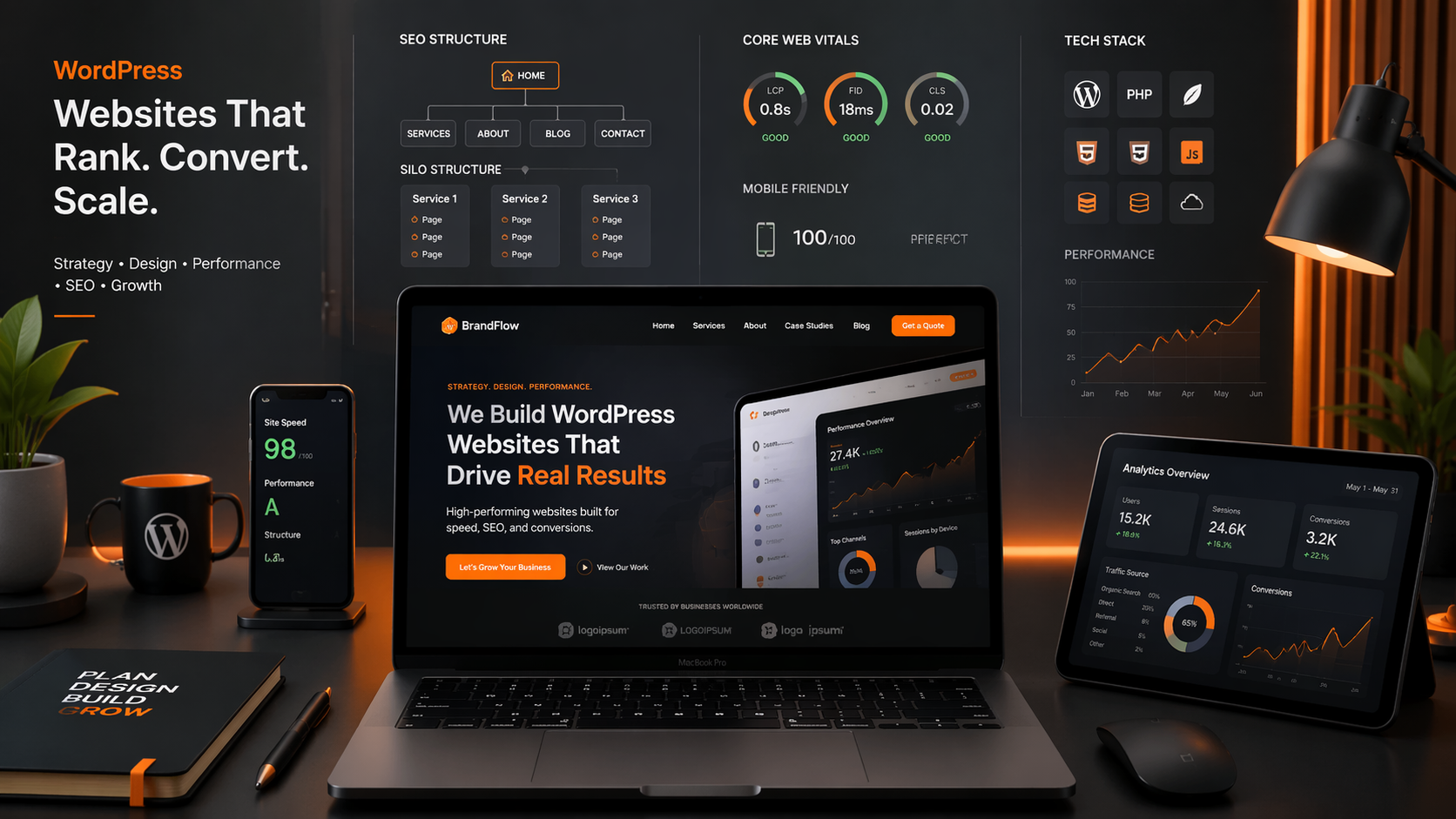
    How We Build WordPress Websites That Rank, Convert, and Scale

    Most WordPress websites fail for a simple reason—they are built for lWhy Most WordPress Websites Fail to Generate Business Growth (And How High-Performance Websites Change Everything)

    A WordPress website should do much more than display your business online. It should attract qualified visitors, build trust, generate leads, and grow alongside your business. Unfortunately, that’s not how most websites are built.

    Many websites focus almost entirely on appearance. They use attractive themes, impressive animations, and modern layouts, yet fail where it matters most. They struggle to rank on Google, load slowly, offer poor user experiences, and break down as businesses begin attracting more traffic.

    At Sterlingweb Growth Labs, we believe a website isn’t a digital brochure—it’s a business asset. Every WordPress website we build is engineered as a complete growth system designed to increase visibility, improve conversions, and support long-term scalability.

    Here’s what separates a high-performing WordPress website from an average one.


    Strategy Comes Before Design

    Most web design projects begin with choosing colors, layouts, and fonts. That’s the wrong approach.

    Before writing a single line of code or designing a single page, we develop a strategy based on business objectives.

    We ask important questions such as:

    • Who is your ideal customer?
    • What problems are they trying to solve?
    • Which services generate the highest profit?
    • What actions should visitors take?
    • Where are competitors failing?

    These answers shape every aspect of the website.

    Instead of creating pages that simply look attractive, we create experiences that guide visitors naturally toward becoming customers. Every section, headline, image, and call-to-action exists for a specific business purpose.

    A beautiful website without strategy is simply decoration. A strategic website becomes a powerful sales tool.


    SEO Starts During Development—Not After Launch

    Many businesses invest in SEO months after their website is complete. By then, fixing poor architecture often requires expensive redevelopment.

    Professional WordPress websites should be built with SEO from day one.

    Our development process includes:

    • Clean URL structures
    • Logical website hierarchy
    • Keyword-focused page architecture
    • Internal linking strategies
    • XML sitemaps
    • Schema markup
    • Optimized heading structures
    • Proper image optimization
    • Crawl-friendly navigation

    Search engines reward websites that are technically sound.

    Building SEO into the foundation allows Google and AI-powered search engines to understand your content faster and index it more effectively.

    This approach creates long-term organic growth instead of relying solely on paid advertising.


    Conversion-Focused Design That Generates Leads

    Traffic alone doesn’t grow businesses.

    Conversions do.

    Every visitor represents an opportunity, and every page should encourage users to take meaningful action.

    Our conversion-focused approach includes:

    • Clear value propositions above the fold
    • Attention-grabbing headlines
    • Strong call-to-action buttons
    • Trust-building testimonials
    • Client success stories
    • Certifications and awards
    • Mobile-friendly layouts
    • Simplified contact forms
    • Strategic content placement

    Visitors should immediately understand:

    • What your business offers
    • Why you’re different
    • Why they should trust you
    • What action to take next

    Reducing friction throughout the customer journey dramatically increases enquiries, consultations, and sales.


    Website Speed Directly Impacts Revenue

    A slow website costs money.

    Research consistently shows that users abandon slow-loading websites within seconds. Google also uses Core Web Vitals and page speed as important ranking signals.

    Performance optimization is never optional.

    Every WordPress website we develop includes:

    • Lightweight custom themes
    • Optimized CSS and JavaScript
    • Modern image formats such as WebP
    • Lazy loading
    • CDN integration
    • Advanced caching
    • Database optimization
    • Server-side performance tuning
    • Minimal plugin dependency

    Our goal is simple:

    Fast websites that load in under two seconds.

    Faster websites improve:

    • Google rankings
    • User experience
    • Lead generation
    • Conversion rates
    • Customer satisfaction

    Performance is one of the highest ROI improvements any business can make.


    Built to Scale as Your Business Grows

    Many businesses eventually outgrow their websites.

    Adding new services becomes difficult.

    Managing content becomes frustrating.

    Performance declines as traffic increases.

    Instead of rebuilding every few years, we build scalable WordPress systems from the beginning.

    This includes:

    • Custom Post Types
    • Flexible Gutenberg Blocks
    • Modular page builders
    • Reusable templates
    • Component-based architecture
    • API-ready development
    • Clean code standards
    • Organized content management

    As your business expands, your website grows with it.

    Whether you’re adding new services, locations, blogs, products, or landing pages, the website remains organized, maintainable, and high-performing.


    Content That Attracts Search Engines and AI Platforms

    Today’s search landscape has changed dramatically.

    Customers no longer search only on Google.

    They ask questions in ChatGPT, Gemini, Claude, Perplexity, and other AI-powered search platforms.

    That means your content must be optimized for both traditional SEO and AI discovery.

    Our content strategy focuses on:

    • Topic clusters
    • Helpful long-form content
    • Structured headings
    • FAQ sections
    • Schema markup
    • Internal linking
    • Semantic keywords
    • Entity optimization
    • High-quality visuals
    • Authoritative content

    This improves visibility across:

    • Google Search
    • Google Discover
    • AI search engines
    • Voice search
    • Featured snippets

    The businesses that win tomorrow are creating AI-friendly websites today.


    Data Drives Every Improvement

    Launching your website isn’t the finish line.

    It’s the starting point.

    Without measurement, growth becomes guesswork.

    Every website should include detailed tracking and analytics.

    We monitor:

    • User journeys
    • Landing page performance
    • Heatmaps
    • Click behaviour
    • Scroll depth
    • Conversion funnels
    • Traffic sources
    • Form submissions
    • Phone call tracking
    • Revenue attribution

    This data helps identify opportunities to continuously improve performance.

    Instead of making assumptions, every optimization is backed by real user behaviour.


    Security and Reliability Build Customer Trust

    Website security isn’t only about protecting files.

    It’s about protecting your reputation.

    One hacked website can result in:

    • Lost rankings
    • Lost customer trust
    • Downtime
    • Malware warnings
    • Revenue loss

    Our WordPress security practices include:

    • Firewall protection
    • Secure server configurations
    • SSL implementation
    • Malware monitoring
    • Automatic backups
    • Two-factor authentication
    • Plugin management
    • Regular software updates
    • Uptime monitoring

    A reliable website keeps your business running 24/7 without interruption.


    Future-Proof Development

    Technology changes rapidly.

    Your website should be ready for what’s next.

    Our development process supports:

    • AI-ready architecture
    • Answer Engine Optimization (AEO)
    • Generative Engine Optimization (GEO)
    • Headless WordPress capabilities
    • API integrations
    • Marketing automation
    • CRM integration
    • HubSpot connectivity
    • Shopify integrations
    • Future feature expansion

    Instead of becoming outdated within a few years, your website remains adaptable as digital marketing evolves.


    Why Businesses Choose Sterlingweb Growth Labs

    At Sterlingweb Growth Labs, we don’t simply build WordPress websites.

    We engineer digital growth platforms.

    Every project combines:

    • Strategic planning
    • Custom WordPress development
    • Technical SEO
    • Core Web Vitals optimization
    • Conversion-focused UX
    • AI-ready architecture
    • Scalable development
    • Enterprise-grade security
    • Performance optimization
    • Ongoing growth support

    Our objective isn’t just launching websites.

    Our objective is helping businesses generate more qualified traffic, increase conversions, strengthen authority, and build sustainable long-term growth.


    Final Thoughts

    The difference between an average WordPress website and a high-performing one isn’t the theme or the plugins—it is the strategy behind the build.

    When business strategy, technical SEO, website performance, conversion optimization, security, scalability, and AI-ready architecture work together, your website transforms from a simple online presence into one of your most valuable business assets.

    If your current website isn’t generating leads, ranking well, or supporting your business goals, it isn’t just underperforming—it’s limiting your growth.

    At Sterlingweb Growth Labs, we build WordPress websites that are designed to rank, built to convert, and engineered to scale.

    Your website shouldn’t just look professional.

    It should become the engine that drives your business forward.


  • Custom WordPress vs Page Builders: What Actually Drives ROI in 2026?

    Custom WordPress vs Page Builders: What Actually Drives ROI in 2026?

    Most people choose between custom WordPress and page builders based on convenience.

    That’s the wrong way to look at it.

    The real question is simple: which one makes more money?

    Because ROI doesn’t care about ease of use—it cares about performance.


    The Reality of Page Builders

    Page builders like Elementor, WPBakery, and others made website creation easy.

    But that convenience comes at a cost.

    Here’s what actually happens under the hood:

    • Heavy code output
    • Slower page load speeds
    • Limited flexibility at scale
    • Dependency on plugins
    • Performance drops as pages grow

    For small projects, it works.

    For serious growth, it becomes a bottleneck.


    The Power of Custom WordPress Development

    Custom WordPress is built for performance from day one.

    Instead of dragging elements, everything is engineered with purpose.

    You get:

    • Clean, lightweight code
    • Faster load times
    • Better Core Web Vitals
    • Full flexibility
    • Scalable architecture

    This directly impacts rankings, user experience, and conversions.


    Speed = Rankings + Conversions

    Google prioritizes fast websites.

    Users do the same.

    A slow page builder site:

    • Drops in rankings
    • Increases bounce rate
    • Reduces conversions

    A custom-built site:

    • Loads faster
    • Keeps users engaged
    • Converts better

    Speed is not a technical metric. It’s a revenue metric.


    SEO Impact

    Most page builder sites struggle with technical SEO.

    Common issues:

    • Excess DOM size
    • Poor structure
    • Unnecessary scripts

    Custom WordPress allows:

    • Clean HTML structure
    • Better schema implementation
    • Full control over SEO architecture

    This gives you a long-term advantage in search rankings.


    Conversion Performance

    Page builders focus on design.

    Custom development focuses on outcomes.

    With custom builds, you can:

    • Optimize every section for conversion
    • Remove unnecessary elements
    • Control user flow precisely

    Less clutter = higher conversions.


    Scalability: The Hidden Factor

    This is where most people get burned.

    A page builder site might work at the start.

    But as you:

    • Add more pages
    • Increase traffic
    • Integrate tools

    Performance starts breaking.

    Custom WordPress is built to handle growth without slowing down.


    Cost vs ROI

    Page builders look cheaper upfront.

    Custom development looks expensive.

    But here’s the truth:

    • Page builders cost less initially but lose money over time through poor performance
    • Custom WordPress costs more upfront but generates higher returns

    Cheap builds are expensive in the long run.


    When Page Builders Make Sense

    Let’s be real—they’re not useless.

    Use them if:

    • You need a quick MVP
    • Budget is extremely limited
    • Performance is not a priority

    Otherwise, you’re setting limits on growth from day one.


    What Actually Drives ROI in 2026

    The websites that win are not the easiest to build.

    They are the ones that:

    • Load fast
    • Rank well
    • Convert consistently
    • Scale without breaking

    That’s where custom WordPress dominates.


    Final Take

    If your goal is just to “have a website,” use a page builder.

    If your goal is to generate revenue, invest in performance.

    Because in 2026, the difference between average and high-performing websites comes down to one thing:

    How they are built.