Blog

  • Shopify Stores Don’t Fail Because of Traffic — They Fail Because of This

    Shopify Stores Don’t Fail Because of Traffic — They Fail Because of This

    Most Shopify store owners blame traffic when sales don’t happen.

    “Not enough visitors.”
    “Ads are not working.”
    “Need to scale campaigns.”

    That’s the wrong diagnosis.

    Traffic is rarely the real problem. The real issue is what happens after the visitor lands on your store.


    The Real Problem: Poor Conversion Structure

    If 1,000 people visit your store and only a handful buy, the issue is not traffic—it’s conversion.

    Here’s where most stores fail:

    • Confusing homepage with no clear direction
    • Weak product positioning
    • No trust signals
    • Slow loading speed
    • Complicated checkout
    • No urgency or reason to act

    You don’t have a traffic problem. You have a system problem.


    Your Store Is Leaking Money

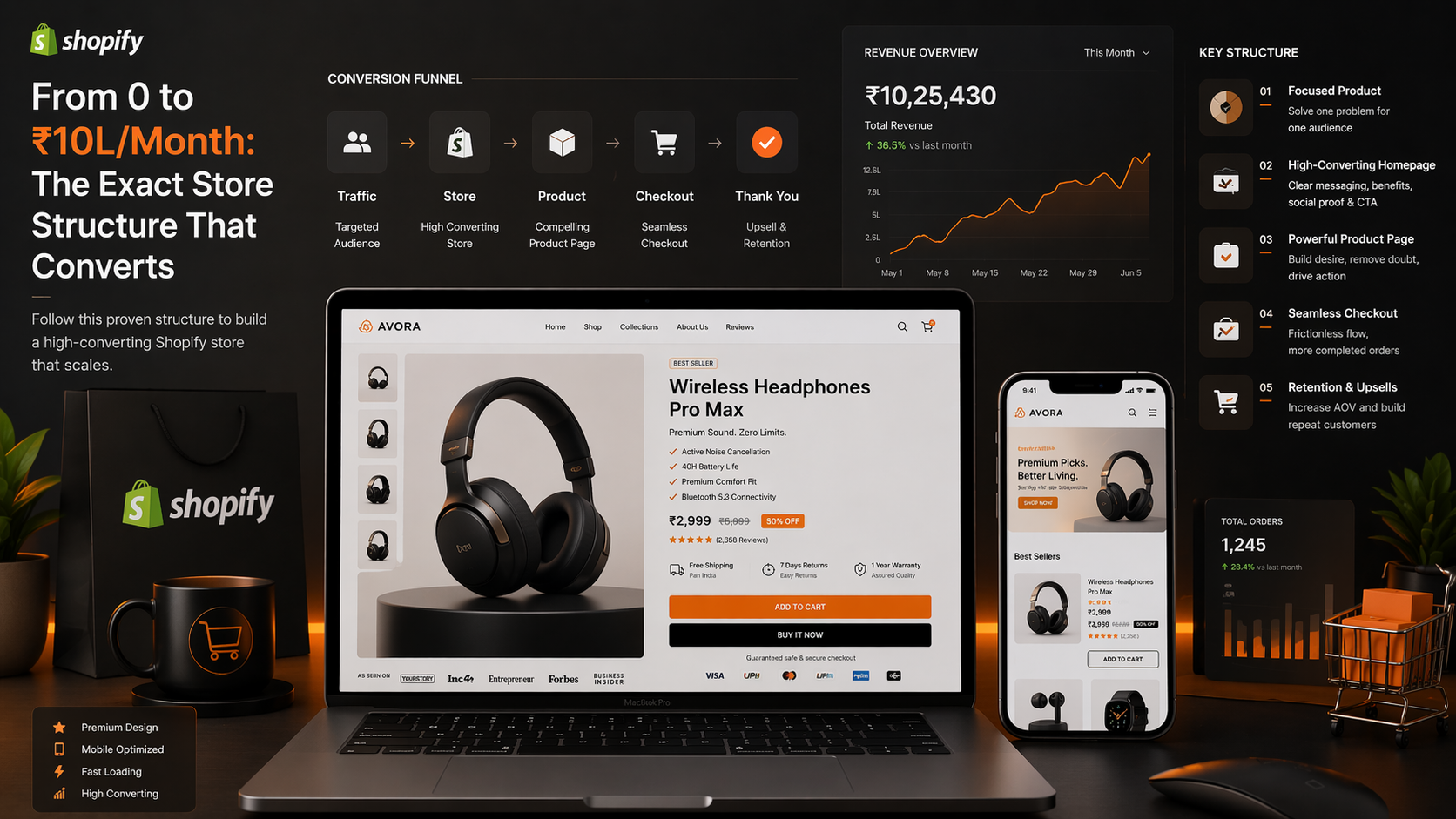
    Think of your store like a funnel.

    If users are dropping off at every stage:

    • Landing → Bounce
    • Product → Exit
    • Cart → Abandon
    • Checkout → Drop

    Then increasing traffic just means losing more money faster.

    Fix the leaks before pouring more traffic in.


    Homepage That Doesn’t Sell

    Most homepages look like catalogs.

    That doesn’t work.

    Your homepage should:

    • Clearly explain what you sell in seconds
    • Show the product in action
    • Highlight key benefits
    • Build trust instantly
    • Push users toward the product page

    If users are confused, they leave.


    Product Pages That Don’t Build Desire

    A weak product page kills conversions instantly.

    Common mistakes:

    • Generic descriptions
    • No emotional hook
    • Poor visuals
    • No reviews or proof
    • No objection handling

    A strong product page should make the user feel like they’re missing out if they don’t buy.


    Checkout That Creates Friction

    Every extra step reduces conversions.

    Problems:

    • Too many fields
    • Forced account creation
    • Limited payment options
    • Hidden charges

    Fix this, and conversions improve immediately.


    No Trust = No Sales

    People don’t buy from stores they don’t trust.

    If your store lacks:

    • Reviews
    • Testimonials
    • Clear policies
    • Professional design

    You’re losing sales, no matter how good your product is.


    Mobile Experience Is Broken

    Most users are on mobile.

    If your store:

    • Loads slowly
    • Feels cluttered
    • Is hard to navigate

    They leave instantly.

    Mobile optimization is not optional. It’s critical.


    No Backend Systems

    Even if users don’t buy immediately, you should bring them back.

    Most stores miss:

    • Abandoned cart emails
    • Retargeting ads
    • SMS follow-ups
    • Upsell sequences

    Without this, you’re leaving easy money on the table.


    The Truth

    More traffic will not fix a broken store.

    It will just expose how broken it is.

    A high-performing Shopify store focuses on:

    • Clear positioning
    • Strong product pages
    • Smooth checkout
    • Trust and credibility
    • Backend revenue systems

    Fix these, and your existing traffic will start converting.


    Final Reality Check

    If your store isn’t making money, stop blaming traffic.

    Fix the structure first.

    Because once your store converts, scaling becomes predictable—not risky.

  • Why 90% of WordPress Websites Fail to Generate Leads (And How to Fix It)

    Why 90% of WordPress Websites Fail to Generate Leads (And How to Fix It)

    Most WordPress websites don’t fail because of design or technology.

    They fail because they are not built to generate leads.

    They sit online, get some traffic, maybe even look professional—but they don’t convert visitors into actual business.

    Here’s the truth most people ignore.


    The Core Problem: No Clear Conversion Strategy

    A website without a conversion strategy is just an online brochure.

    Most sites:

    • Don’t define a clear goal
    • Don’t guide users toward action
    • Don’t have a structured funnel

    If your site doesn’t tell users what to do next, they leave.


    Weak Messaging That Confuses Visitors

    You have seconds to grab attention.

    Common mistakes:

    • Generic headlines
    • No clear value proposition
    • Talking about the business instead of the customer

    If users don’t immediately understand what you offer and why it matters, they bounce.


    No Strong Call-to-Action

    A shocking number of websites either:

    • Hide their CTA
    • Use weak CTAs like “Learn More”
    • Place it in the wrong spots

    A high-converting site makes the next step obvious and easy.


    Poor Landing Page Structure

    Most WordPress pages are designed for layout—not conversion.

    A proper lead generation page includes:

    • Clear headline and subheadline
    • Problem → solution flow
    • Benefits, not just features
    • Social proof
    • Strong CTA repeated across the page

    Without this structure, users scroll and leave.


    Forms That Kill Conversions

    Long, complicated forms destroy lead generation.

    Problems:

    • Too many fields
    • No incentive to fill
    • Poor placement

    Fix it by:

    • Keeping forms short
    • Offering something valuable (lead magnet)
    • Placing forms where intent is highest

    No Trust = No Leads

    People don’t share their details with brands they don’t trust.

    Missing elements:

    • Testimonials
    • Case studies
    • Reviews
    • Certifications or proof

    Trust is not optional. It directly impacts conversions.


    Slow and Clunky Experience

    Speed matters more than people think.

    If your site:

    • Takes too long to load
    • Feels heavy or outdated
    • Breaks on mobile

    Users leave before converting.


    No Follow-Up System

    Even interested users don’t always convert immediately.

    Most websites fail because they don’t:

    • Capture emails properly
    • Run follow-up sequences
    • Retarget visitors

    Without a system, you lose potential leads forever.


    No Data Tracking or Optimization

    You can’t improve what you don’t measure.

    Most sites:

    • Don’t track conversions
    • Don’t analyze user behavior
    • Don’t test improvements

    This keeps them stuck at low performance.


    How to Fix It

    If you want your WordPress site to generate leads consistently, focus on:

    • Clear positioning and messaging
    • Strong landing page structure
    • Optimized forms and CTAs
    • Fast and mobile-friendly experience
    • Trust-building elements
    • Lead capture and follow-up systems
    • Continuous optimization based on data

    Fix these, and your website stops being a liability and starts becoming a lead machine.


    The Reality

    Traffic without conversion is wasted effort.

    A high-performing WordPress website is not built for looks—it’s built to capture, convert, and grow your business.

  • Custom WordPress vs Page Builders: What Actually Drives ROI in 2026?

    Custom WordPress vs Page Builders: What Actually Drives ROI in 2026?

    Most people choose between custom WordPress and page builders based on convenience.

    That’s the wrong way to look at it.

    The real question is simple: which one makes more money?

    Because ROI doesn’t care about ease of use—it cares about performance.


    The Reality of Page Builders

    Page builders like Elementor, WPBakery, and others made website creation easy.

    But that convenience comes at a cost.

    Here’s what actually happens under the hood:

    • Heavy code output
    • Slower page load speeds
    • Limited flexibility at scale
    • Dependency on plugins
    • Performance drops as pages grow

    For small projects, it works.

    For serious growth, it becomes a bottleneck.


    The Power of Custom WordPress Development

    Custom WordPress is built for performance from day one.

    Instead of dragging elements, everything is engineered with purpose.

    You get:

    • Clean, lightweight code
    • Faster load times
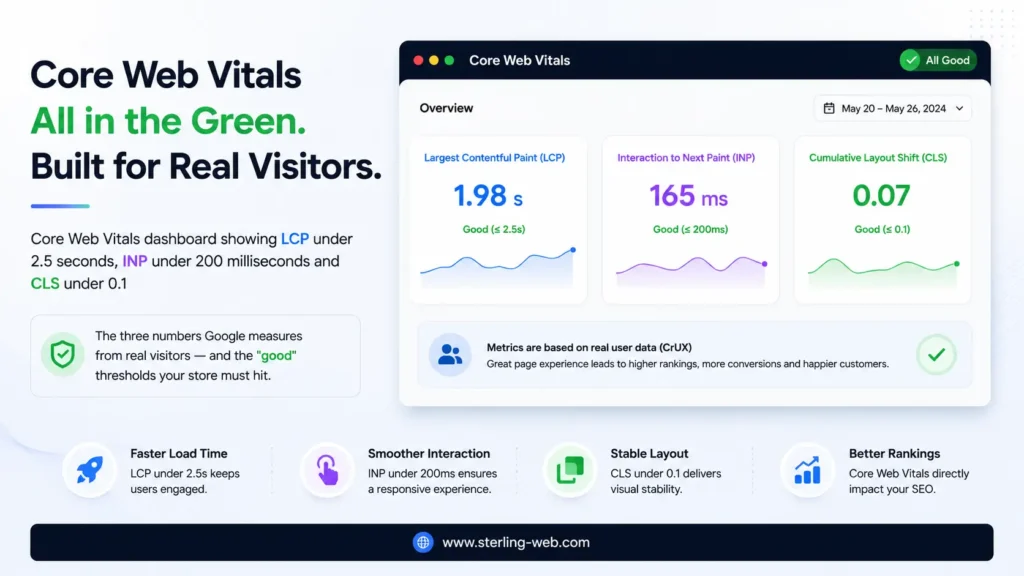
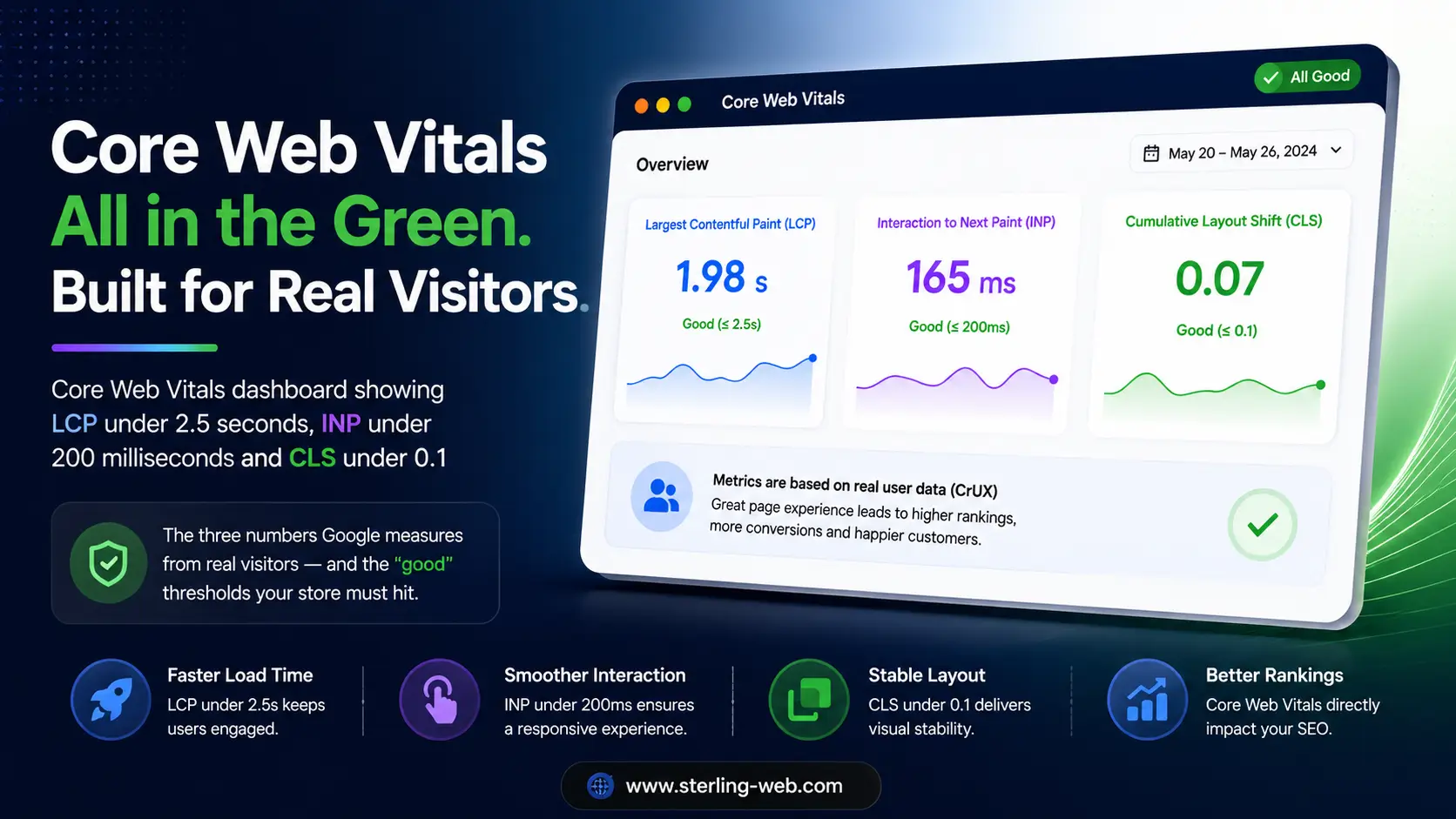
    • Better Core Web Vitals
    • Full flexibility
    • Scalable architecture

    This directly impacts rankings, user experience, and conversions.


    Speed = Rankings + Conversions

    Google prioritizes fast websites.

    Users do the same.

    A slow page builder site:

    • Drops in rankings
    • Increases bounce rate
    • Reduces conversions

    A custom-built site:

    • Loads faster
    • Keeps users engaged
    • Converts better

    Speed is not a technical metric. It’s a revenue metric.


    SEO Impact

    Most page builder sites struggle with technical SEO.

    Common issues:

    • Excess DOM size
    • Poor structure
    • Unnecessary scripts

    Custom WordPress allows:

    • Clean HTML structure
    • Better schema implementation
    • Full control over SEO architecture

    This gives you a long-term advantage in search rankings.


    Conversion Performance

    Page builders focus on design.

    Custom development focuses on outcomes.

    With custom builds, you can:

    • Optimize every section for conversion
    • Remove unnecessary elements
    • Control user flow precisely

    Less clutter = higher conversions.


    Scalability: The Hidden Factor

    This is where most people get burned.

    A page builder site might work at the start.

    But as you:

    • Add more pages
    • Increase traffic
    • Integrate tools

    Performance starts breaking.

    Custom WordPress is built to handle growth without slowing down.


    Cost vs ROI

    Page builders look cheaper upfront.

    Custom development looks expensive.

    But here’s the truth:

    • Page builders cost less initially but lose money over time through poor performance
    • Custom WordPress costs more upfront but generates higher returns

    Cheap builds are expensive in the long run.


    When Page Builders Make Sense

    Let’s be real—they’re not useless.

    Use them if:

    • You need a quick MVP
    • Budget is extremely limited
    • Performance is not a priority

    Otherwise, you’re setting limits on growth from day one.


    What Actually Drives ROI in 2026

    The websites that win are not the easiest to build.

    They are the ones that:

    • Load fast
    • Rank well
    • Convert consistently
    • Scale without breaking

    That’s where custom WordPress dominates.


    Final Take

    If your goal is just to “have a website,” use a page builder.

    If your goal is to generate revenue, invest in performance.

    Because in 2026, the difference between average and high-performing websites comes down to one thing:

    How they are built.

  • Shopify vs Custom eCommerce: Which One Actually Makes You More Profit?

    Shopify vs Custom eCommerce: Which One Actually Makes You More Profit?

    Most people compare Shopify and custom eCommerce based on features.

    That’s the wrong approach.

    The only thing that matters is profit.

    Not setup speed. Not ease of use. Not even design.

    Profit.


    The Real Difference: Control vs Convenience

    Shopify is built for convenience.

    Custom eCommerce is built for control.

    Shopify gives you:

    • Fast setup
    • Ready-made features
    • App ecosystem
    • Managed hosting

    Custom eCommerce gives you:

    • Full control over everything
    • No platform limitations
    • Tailored performance
    • Custom workflows

    Convenience helps you start. Control helps you scale.


    Where Shopify Wins

    Let’s be clear—Shopify is not weak.

    It’s powerful for:

    • Quick launch stores
    • Founders with limited technical knowledge
    • Businesses testing products
    • Standard eCommerce models

    You can go live in days and start selling immediately.

    That speed matters in the early stage.


    Where Shopify Starts Costing You

    The problem shows up when you grow.

    As your store scales:

    • App costs increase
    • Transaction fees eat margins
    • Customization becomes limited
    • Performance depends on apps

    You don’t notice it at ₹1L/month.

    You feel it at ₹10L+/month.


    The Power of Custom eCommerce

    Custom eCommerce is not about building from scratch for fun.

    It’s about building exactly what your business needs.

    You get:

    • Optimized performance for your use case
    • Faster load times
    • Higher conversion control
    • No dependency on third-party apps
    • Better long-term cost efficiency

    You’re not renting a system. You’re owning it.


    Profit Comes From Margins + Conversion

    Let’s break it down simply.

    Profit depends on:

    • Conversion rate
    • Average order value
    • Cost per transaction
    • Operational efficiency

    Shopify impacts:

    • Transaction fees
    • App costs
    • Limited checkout control

    Custom eCommerce improves:

    • Conversion optimization
    • Checkout flow control
    • Cost efficiency at scale

    This is where the profit gap starts widening.


    Performance = Revenue

    Speed and performance directly impact revenue.

    A slower Shopify store (due to apps and scripts):

    • Reduces conversions
    • Increases bounce rate

    A custom-built store:

    • Loads faster
    • Handles traffic better
    • Delivers smoother UX

    Even a small increase in conversion rate can mean lakhs in extra revenue.


    Scalability: The Hidden Profit Factor

    Most people ignore this until it’s too late.

    As you grow:

    • Shopify becomes restrictive
    • Complex features require workarounds
    • Costs keep stacking

    Custom eCommerce:

    • Scales without performance drops
    • Supports advanced features easily
    • Adapts to your business model

    Scaling without friction = higher profit.


    Cost Comparison (The Truth Most Don’t Say)

    Shopify looks cheaper upfront.

    But over time:

    • Monthly plans
    • App subscriptions
    • Transaction fees

    All add up.

    Custom eCommerce:

    • Higher initial investment
    • Lower long-term operational cost

    Short-term saving vs long-term profit.


    When Shopify Makes More Sense

    Use Shopify if:

    • You’re starting out
    • You want to validate a product quickly
    • You don’t have technical resources
    • Speed matters more than control

    When Custom eCommerce Wins

    Go custom if:

    • You’re scaling aggressively
    • You need advanced features
    • You want better margins
    • You care about long-term profit

    The Reality

    Shopify helps you start fast.

    Custom eCommerce helps you grow profitably.

    The mistake most businesses make is staying on Shopify when they’ve already outgrown it.


    Final Take

    If your goal is to test, Shopify is enough.

    If your goal is to maximize profit, control your system.

    Because at scale, profit doesn’t come from convenience.

    It comes from optimization, control, and performance.

  • The SEO System We Use to Generate Consistent Leads for Clients

    The SEO System We Use to Generate Consistent Leads for Clients

    The SEO System That Generates Predictable Leads: A Step-by-Step Framework for Sustainable Business Growth

    Many businesses invest in SEO expecting a steady stream of leads, only to end up disappointed. They publish blog posts, target a few keywords, and wait for rankings that never translate into meaningful business growth.

    The problem isn’t that SEO has stopped working.

    The problem is that most businesses approach SEO as a collection of isolated tactics instead of a complete growth system.

    Modern SEO is no longer about ranking for as many keywords as possible. It’s about attracting the right audience, answering their questions, building trust, and guiding them toward becoming customers.

    At Sterlingweb Growth Labs, we don’t build SEO campaigns—we build SEO systems. These systems combine keyword research, technical optimization, content strategy, user experience, conversion optimization, and continuous improvement to create predictable lead generation.

    If your SEO isn’t generating qualified enquiries, this framework will show you what needs to change.


    Why Traditional SEO Strategies No Longer Work

    For years, SEO was treated like a checklist.

    Businesses would:

    • Target high-volume keywords
    • Publish random blog posts
    • Build backlinks
    • Wait for rankings

    While those activities still have value, they are no longer enough.

    Search engines have become significantly better at understanding search intent, content quality, user experience, and website authority.

    Ranking today requires more than optimization—it requires strategy.

    Successful SEO campaigns operate as interconnected systems where every page, keyword, and user interaction contributes to long-term growth.


    Step 1: Build an Intent-Based Keyword Strategy

    Every successful SEO campaign starts with understanding why people search.

    Many businesses focus exclusively on search volume.

    That’s a mistake.

    A keyword generating 500 highly qualified visitors can produce more revenue than another attracting 10,000 visitors with no buying intent.

    We categorize keywords based on user intent:

    Commercial Intent

    Users actively looking for services.

    Examples:

    • Shopify development agency
    • WordPress SEO services
    • Technical SEO consultant
    • Website speed optimization company

    Comparison Intent

    Users evaluating options.

    Examples:

    • WooCommerce vs Shopify
    • Best Shopify agency
    • WordPress vs Shopify SEO

    Problem-Aware Intent

    Users searching for solutions.

    Examples:

    • Why is my website slow?
    • How to improve Core Web Vitals
    • Why is my Shopify store not converting?

    Targeting intent rather than volume attracts visitors who are far more likely to become customers.


    Step 2: Build Topic Clusters Instead of Random Blogs

    Publishing disconnected articles is one of the biggest mistakes businesses make.

    Google increasingly rewards topical authority.

    Instead of producing isolated content, create comprehensive content clusters around your core services.

    For example, if your primary service is Shopify development, your cluster might include:

    • Shopify Development Services (Pillar Page)
    • Shopify Theme Customization
    • Shopify Speed Optimization
    • Shopify SEO Guide
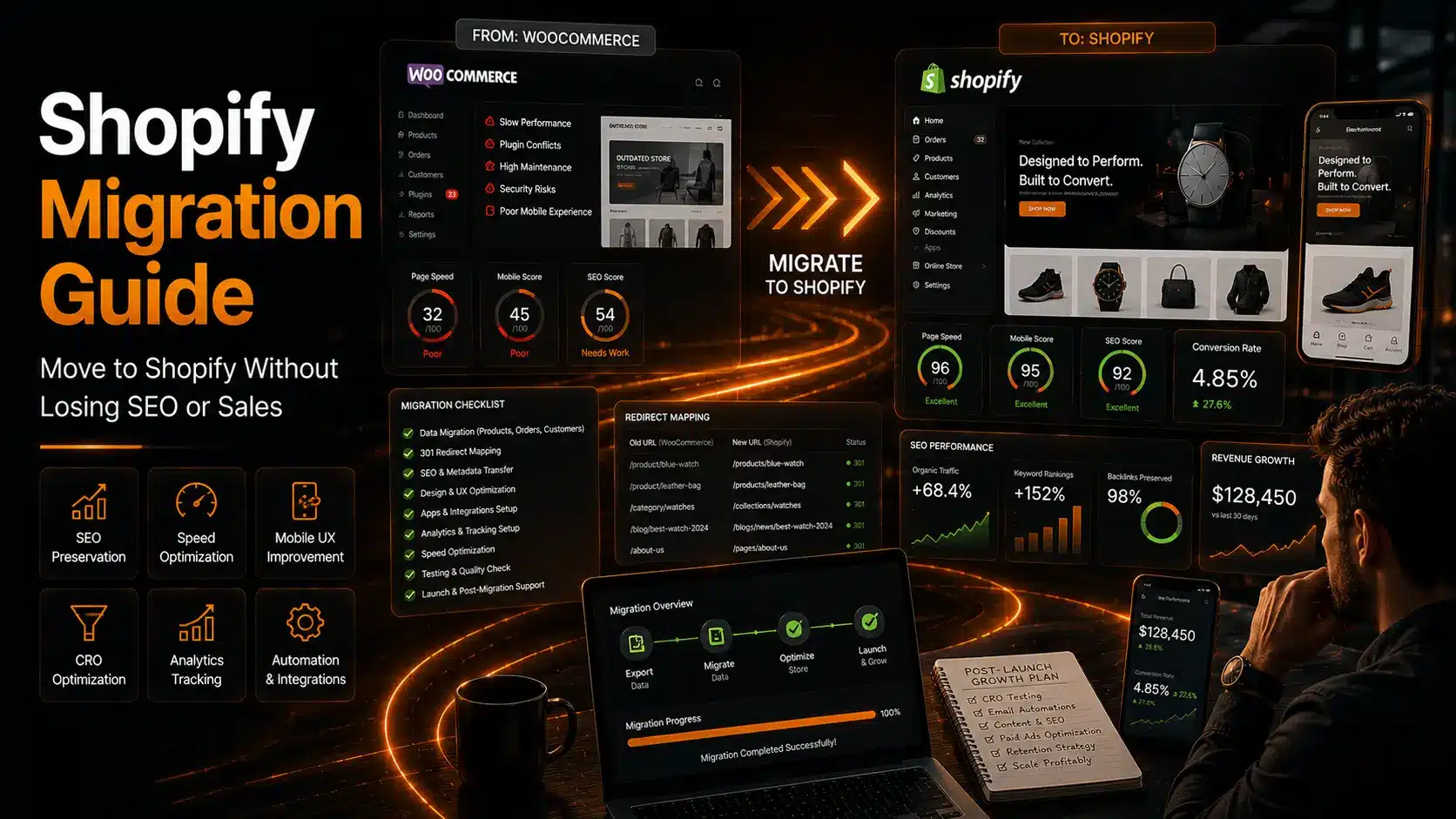
    • WooCommerce to Shopify Migration
    • Shopify App Development
    • Shopify CRO
    • Shopify Performance Optimization

    Each article links strategically to related content and reinforces your expertise.

    This improves crawlability, user engagement, and search visibility.


    Step 3: Create Content That Converts

    Ranking without conversions has little business value.

    Every page should be designed to move visitors toward taking action.

    Effective SEO content includes:

    • Clear positioning
    • Compelling headlines
    • Strong value propositions
    • Logical content structure
    • Real-world examples
    • Calls-to-action throughout the page
    • Client success stories
    • Frequently asked questions

    Rather than simply answering questions, your content should guide readers toward solving their problems through your services.

    SEO attracts visitors.

    Conversion-focused content turns them into leads.


    Step 4: Strengthen Your Technical SEO Foundation

    Even exceptional content struggles if the technical foundation is weak.

    Modern technical SEO focuses on elements that directly impact search performance and user experience.

    Key priorities include:

    • Fast loading pages
    • Core Web Vitals optimization
    • Mobile-first design
    • Clean URL structures
    • XML sitemaps
    • Schema markup
    • Proper heading hierarchy
    • Canonical tags
    • Secure HTTPS implementation
    • Crawl error resolution

    These improvements help search engines understand your website while providing a better experience for visitors.


    Step 5: Use Internal Linking Strategically

    Internal linking is one of the most overlooked aspects of SEO.

    Done correctly, it helps:

    • Distribute authority across your website
    • Improve crawl efficiency
    • Increase time on site
    • Guide visitors through the customer journey
    • Strengthen topical relevance

    Instead of adding links randomly, create intentional pathways that connect related content and lead visitors toward your core service pages.

    Think of internal links as roads connecting every part of your digital ecosystem.


    Step 6: Publish Consistently With Purpose

    Many businesses publish content whenever inspiration strikes.

    Successful SEO campaigns follow structured editorial strategies.

    A content calendar should define:

    • Target keywords
    • Search intent
    • Publishing schedule
    • Content clusters
    • Internal linking opportunities
    • Content updates

    Every article should serve a specific purpose within the overall SEO strategy.

    Consistency builds topical authority and signals ongoing relevance to search engines.


    Step 7: Integrate Lead Generation Into Every Page

    Traffic alone doesn’t generate business growth.

    Every page should include opportunities for visitors to become leads.

    Examples include:

    • Consultation booking forms
    • Downloadable resources
    • Free audits
    • Email newsletter subscriptions
    • Exit-intent offers
    • Contact forms
    • Demo requests

    Calls-to-action should appear naturally throughout the content rather than only at the bottom of the page.

    The objective is to make taking the next step easy and obvious.


    Step 8: Measure, Analyze, and Improve

    SEO is never finished.

    The highest-performing websites continuously improve based on real data.

    Monitor metrics such as:

    • Organic rankings
    • Click-through rates
    • Bounce rates
    • User engagement
    • Conversion rates
    • Landing page performance
    • Core Web Vitals
    • Search Console insights

    Instead of publishing new content endlessly, improve the pages already attracting traffic.

    Small optimization improvements often produce significant long-term gains.


    Build an SEO System—Not Individual Pages

    Every page on your website should support the larger strategy.

    Your SEO ecosystem should include:

    Pillar Pages

    Comprehensive service pages targeting high-intent keywords.

    Supporting Articles

    Educational content answering related questions.

    Internal Links

    Connections that strengthen topical authority.

    Conversion Elements

    Calls-to-action, lead forms, and trust signals.

    Analytics

    Continuous monitoring and optimization.

    Together, these components create a predictable lead-generation system rather than isolated rankings.


    Why SEO and Conversion Optimization Must Work Together

    SEO attracts qualified visitors.

    Conversion Rate Optimization (CRO) turns those visitors into customers.

    A complete growth strategy combines:

    • Technical SEO
    • Intent-based keyword research
    • Helpful content
    • Fast website performance
    • Mobile-first design
    • Trust-building elements
    • Strong calls-to-action
    • Lead generation systems

    Businesses that integrate SEO and CRO consistently outperform competitors focused solely on rankings.


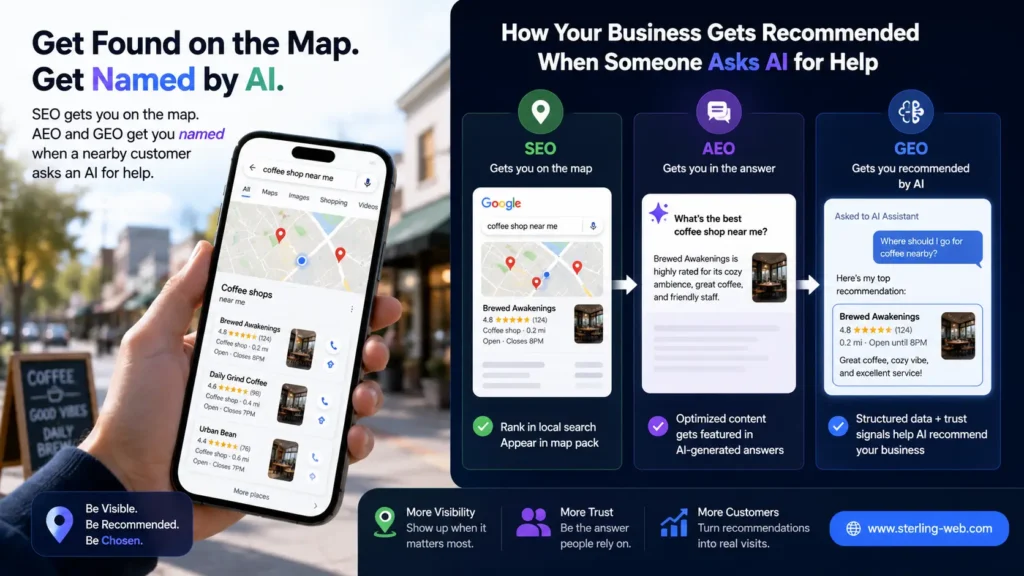
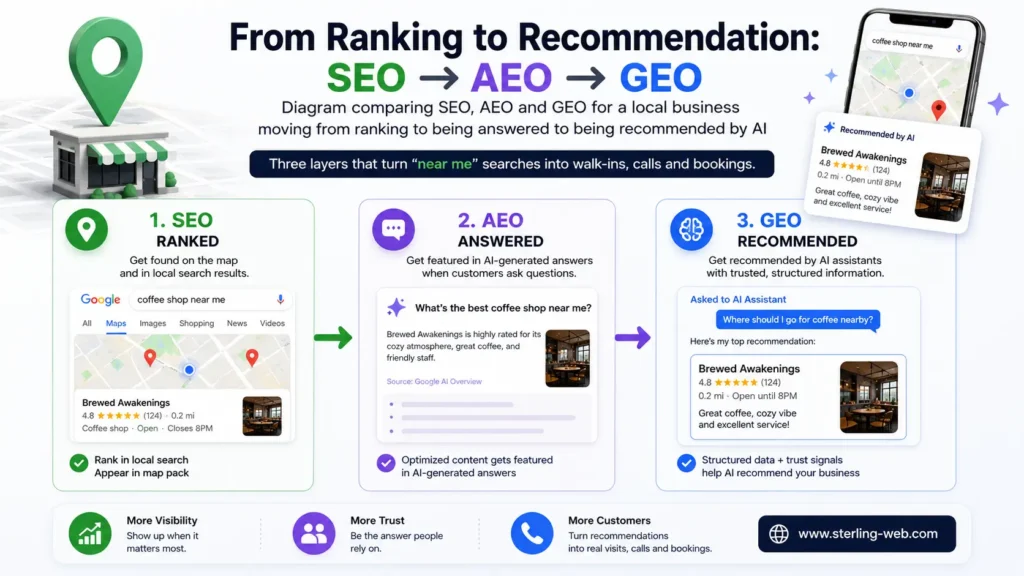
    Preparing for AI Search

    Search behavior continues evolving with platforms like ChatGPT, Gemini, Claude, Copilot, and Perplexity.

    Future-ready SEO includes:

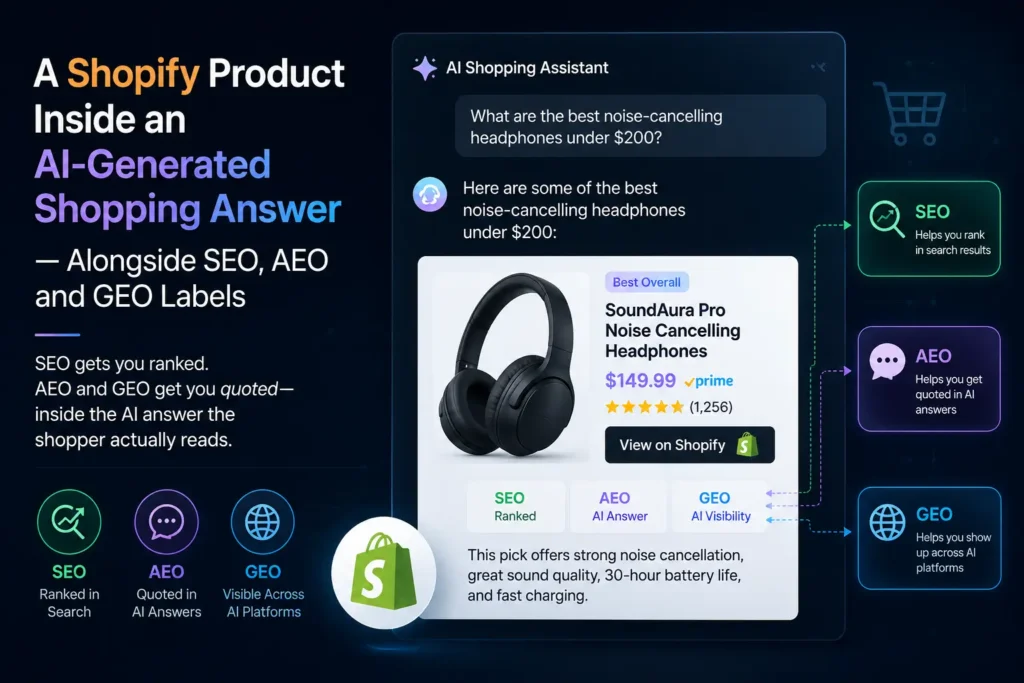
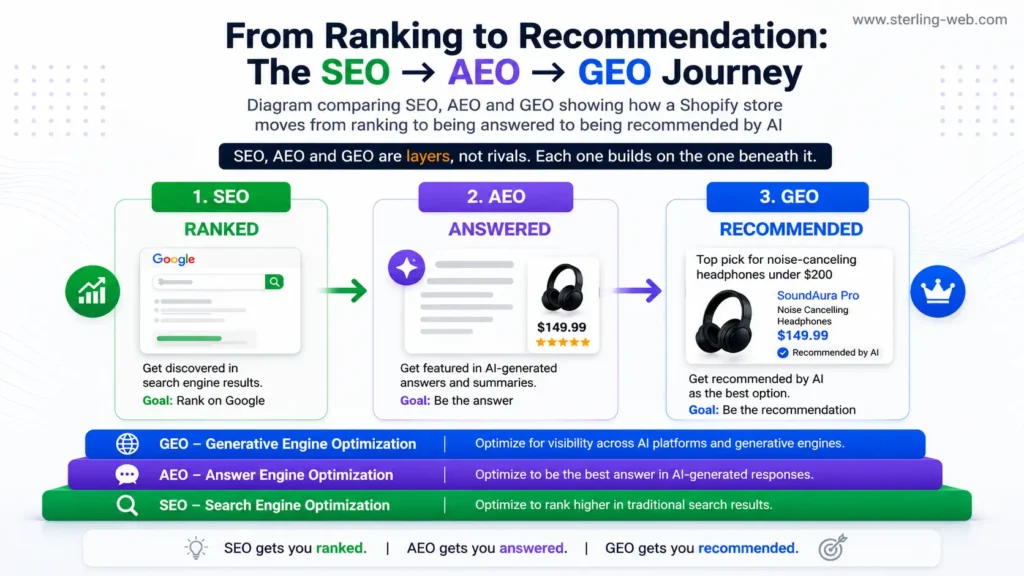
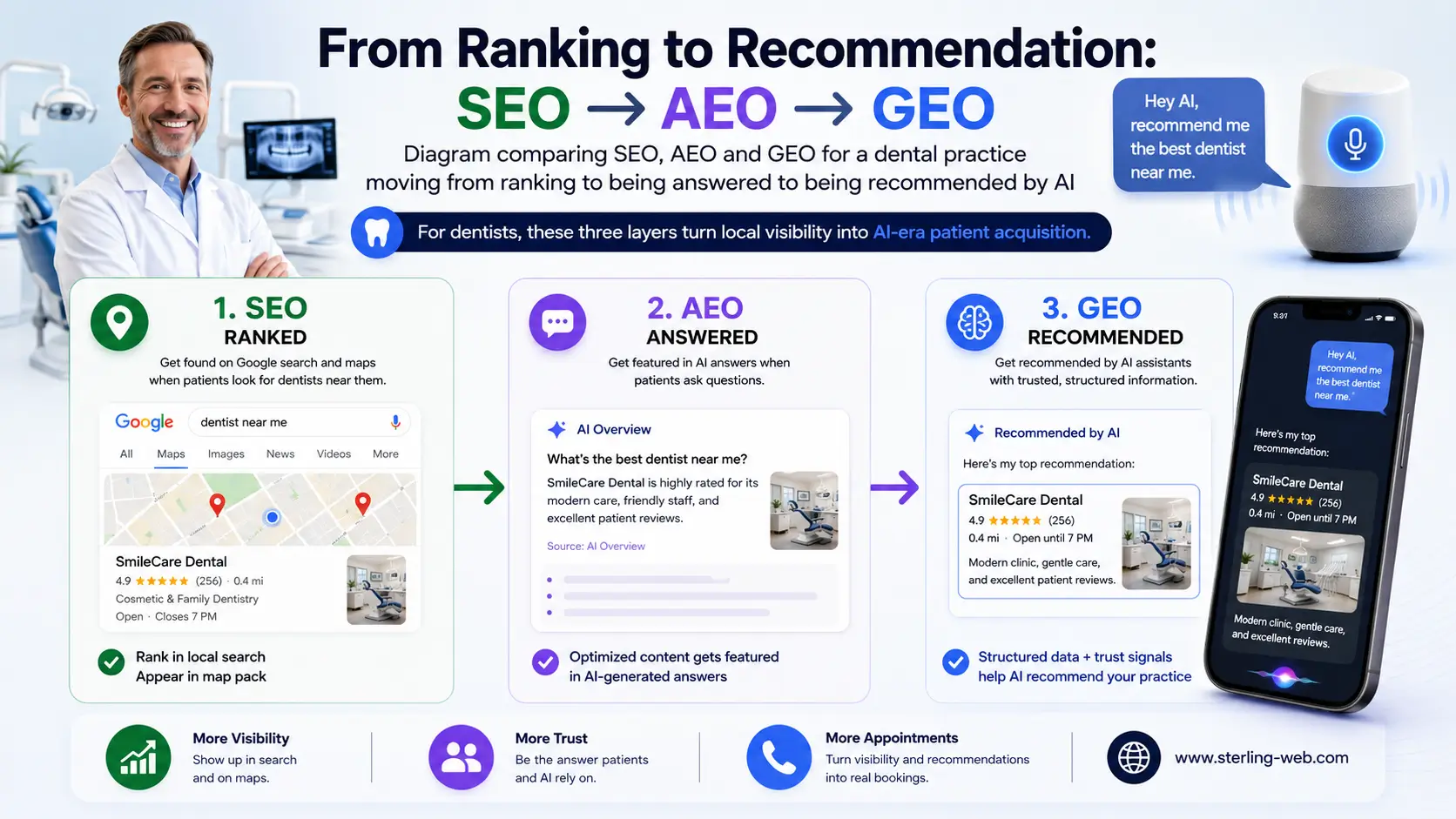
    • Answer Engine Optimization (AEO)
    • Generative Engine Optimization (GEO)
    • Structured data
    • Entity optimization
    • Clear content hierarchy
    • Comprehensive FAQs
    • AI-friendly formatting

    Businesses optimizing for both traditional search engines and AI-powered discovery will gain a significant competitive advantage.


    Why Businesses Choose Sterlingweb Growth Labs

    At Sterlingweb Growth Labs, we build SEO systems designed to generate measurable business outcomes.

    Our services include:

    • Technical SEO Audits
    • Enterprise SEO Strategy
    • WordPress SEO
    • Shopify SEO
    • Answer Engine Optimization (AEO)
    • Generative Engine Optimization (GEO)
    • AI SEO
    • Content Strategy
    • Core Web Vitals Optimization
    • Website Speed Optimization
    • Conversion Rate Optimization
    • Marketing Automation

    We don’t measure success by keyword rankings alone.

    We measure success by qualified leads, conversions, and sustainable business growth.


    Final Thoughts

    SEO isn’t about publishing more content or ranking for more keywords.

    It’s about creating a structured system that consistently attracts the right audience, builds trust, and converts visitors into customers.

    Businesses that rely on isolated tactics often experience unpredictable results.

    Businesses that build complete SEO systems generate predictable growth.

    If your website attracts traffic but produces few enquiries, the issue probably isn’t search volume.

    It’s your system.

    Build an SEO strategy that combines intent-driven keywords, technical excellence, conversion-focused content, internal linking, and continuous optimization.

    That’s how modern SEO becomes one of the most reliable lead-generation channels available.

    At Sterlingweb Growth Labs, that’s exactly how we help businesses turn search visibility into measurable revenue.


    Frequently Asked Questions

    What is an SEO system?

    An SEO system is a structured approach that combines keyword strategy, technical SEO, content marketing, internal linking, conversion optimization, and performance tracking to generate consistent organic leads.

    Why is search intent more important than keyword volume?

    Search intent identifies what users actually want to accomplish. Targeting high-intent keywords attracts visitors who are more likely to become customers, resulting in higher conversion rates.

    What are topic clusters?

    Topic clusters are groups of related articles linked to a central pillar page. They help establish topical authority, improve internal linking, and strengthen search engine understanding of your expertise.

    Why should SEO include conversion optimization?

    SEO brings visitors to your website, but conversion optimization ensures those visitors take meaningful actions such as submitting enquiries, booking consultations, or making purchases.

    How often should SEO content be published?

    Consistency matters more than volume. Follow a structured content calendar that prioritizes quality, relevance, and alignment with your overall SEO strategy while continuously updating and improving existing content.

  • Why Ranking #1 on Google Doesn’t Matter If You Don’t Convert”

    Why Ranking #1 on Google Doesn’t Matter If You Don’t Convert”

    Ranking #1 on Google Isn’t Enough: Why Conversion Optimization Matters More Than SEO Rankings in 2026

    For years, businesses have treated Google’s first page as the ultimate destination.

    Marketing agencies promise top rankings.

    Business owners obsess over keywords.

    Monthly SEO reports celebrate increased traffic.

    But here’s the uncomfortable truth:

    Ranking #1 on Google does not guarantee business growth.

    A website can receive thousands of visitors every month and still generate very few leads, sales, or enquiries.

    Why?

    Because rankings create visibility.

    Conversions create revenue.

    At Sterlingweb Growth Labs, we’ve audited websites that ranked at the top of Google yet failed to produce meaningful business results. We have also seen websites ranking below competitors generate significantly more revenue because they focused on customer experience, conversion optimization, and buying intent instead of traffic alone.

    Modern SEO is no longer about getting visitors.

    It’s about turning those visitors into customers.

    Here’s why conversion optimization has become just as important as search engine rankings.


    Traffic Is Potential—Conversions Create Profit

    Every website owner loves seeing traffic increase.

    More impressions.

    More clicks.

    More visitors.

    It feels like progress.

    But traffic is only the beginning of the customer journey.

    If visitors arrive on your website and immediately leave without taking action, those rankings have produced little business value.

    A website can rank #1 while still:

    • Generating very few enquiries
    • Producing poor sales
    • Wasting advertising budgets
    • Delivering low ROI
    • Increasing bounce rates

    Traffic is simply opportunity.

    Revenue comes from what happens after someone lands on your website.


    The Biggest SEO Mistake Businesses Still Make

    Many SEO strategies focus entirely on improving keyword rankings.

    They rarely consider what happens after someone clicks.

    Businesses invest months creating content that ranks well but overlook critical questions like:

    • Does the page answer the visitor’s questions?
    • Is there a compelling reason to take action?
    • Is the customer journey simple?
    • Does the page build trust?

    When these elements are missing, visitors leave without converting.

    This creates a common problem:

    High rankings.

    High traffic.

    High bounce rate.

    Low revenue.

    That’s not successful SEO.

    That’s missed opportunity.


    Ranking for the Wrong Keywords Attracts the Wrong Audience

    Not every keyword represents buying intent.

    For example, someone searching:

    “What is Shopify?”

    has very different intentions from someone searching:

    “Hire Shopify development agency.”

    One user is researching.

    The other is ready to purchase.

    Businesses often celebrate ranking for high-volume keywords while ignoring commercial search intent.

    Instead of chasing traffic volume, focus on keywords that indicate customers are actively looking for solutions.

    Examples include:

    • Shopify development agency
    • WordPress SEO services
    • Website speed optimization company
    • Technical SEO consultant
    • WooCommerce to Shopify migration
    • Core Web Vitals optimization
    • AI SEO services
    • AEO agency
    • GEO optimization services

    High-intent traffic consistently produces better business results than large amounts of untargeted visitors.


    Your Landing Page Must Guide Visitors

    SEO gets users onto your website.

    Your landing page determines whether they stay.

    Unfortunately, many landing pages are designed for search engines rather than people.

    Common problems include:

    • Generic headlines
    • Weak value propositions
    • Poor visual hierarchy
    • No clear next step
    • Confusing layouts
    • Too much text without direction

    A high-converting landing page should immediately answer four questions:

    • What does this business do?
    • Why should I trust them?
    • How does this solve my problem?
    • What should I do next?

    If visitors cannot answer those questions within seconds, conversion rates will suffer regardless of rankings.


    Strong Calls-to-Action Drive Decisions

    One of the simplest improvements businesses can make is strengthening their Calls-to-Action (CTAs).

    Many websites rely on vague buttons like:

    • Learn More
    • Submit
    • Click Here

    These provide little motivation.

    Instead, use action-oriented CTAs such as:

    • Book a Free Consultation
    • Get a Custom Proposal
    • Request a Shopify Audit
    • Schedule Your SEO Strategy Call
    • Start Your Website Project

    A clear CTA removes uncertainty and encourages users to take the next step.


    Trust Is the Biggest Conversion Factor

    Even interested visitors hesitate if they don’t trust your business.

    Trust isn’t created through design alone.

    It comes from proof.

    Effective trust signals include:

    • Client testimonials
    • Case studies
    • Verified reviews
    • Portfolio examples
    • Industry certifications
    • Awards
    • Security badges
    • Transparent pricing
    • Real team information

    People don’t simply buy products or services.

    They buy confidence.

    The more evidence you provide that your business delivers results, the easier it becomes for customers to choose you.


    User Experience Directly Affects Revenue

    Google increasingly rewards websites that deliver excellent user experiences.

    Customers expect websites to be:

    • Fast
    • Mobile-friendly
    • Easy to navigate
    • Visually organized
    • Accessible
    • Secure

    If your website loads slowly, feels confusing, or performs poorly on smartphones, users leave before converting.

    A professional website should provide:

    • Fast page loading
    • Clean navigation
    • Simple forms
    • Mobile-first layouts
    • Logical content flow
    • Accessible design

    User experience influences both SEO rankings and conversion rates simultaneously.


    Website Speed Impacts Both Rankings and Sales

    Performance isn’t only an SEO metric.

    It directly affects customer behavior.

    Slow websites increase:

    • Bounce rates
    • Cart abandonment
    • Customer frustration
    • Advertising costs

    Professional optimization focuses on:

    • Core Web Vitals
    • Image compression
    • Efficient code
    • Caching
    • Content Delivery Networks (CDNs)
    • JavaScript optimization

    A faster website improves rankings while also increasing customer satisfaction and conversions.


    Every Website Needs a Conversion Funnel

    Many websites stop thinking after someone visits.

    Successful businesses think beyond the first click.

    A complete conversion funnel includes:

    • Valuable landing pages
    • Lead capture forms
    • Email follow-up sequences
    • Consultation booking
    • CRM integration
    • Marketing automation
    • Retargeting campaigns

    Visitors rarely purchase immediately.

    Your website should continue nurturing relationships long after the initial visit.

    Without a structured funnel, valuable traffic disappears.


    Modern SEO Combines Visibility and Conversion

    Today’s highest-performing websites combine:

    • Technical SEO
    • High-intent keyword research
    • Helpful content
    • Conversion Rate Optimization (CRO)
    • Mobile-first design
    • Core Web Vitals
    • Strong calls-to-action
    • Trust-building elements
    • Analytics
    • Marketing automation

    SEO and CRO should never operate independently.

    They work together to create measurable business growth.


    AI Search Makes Conversion Even More Important

    As platforms like ChatGPT, Gemini, Claude, Copilot, and Perplexity influence buying decisions, attracting visitors is becoming only one part of digital marketing.

    Businesses must optimize for:

    • Traditional SEO
    • Answer Engine Optimization (AEO)
    • Generative Engine Optimization (GEO)
    • AI-ready content
    • Structured data
    • Entity optimization

    However, even if AI search sends qualified visitors to your website, poor conversion experiences will still limit results.

    Future-ready businesses optimize both discovery and conversion.


    Why Businesses Choose Sterlingweb Growth Labs

    At Sterlingweb Growth Labs, we believe rankings are only valuable when they generate measurable business outcomes.

    Our growth strategy combines:

    • Technical SEO
    • Conversion Rate Optimization (CRO)
    • Answer Engine Optimization (AEO)
    • Generative Engine Optimization (GEO)
    • WordPress Development
    • Shopify Development
    • Website Speed Optimization
    • Core Web Vitals Improvements
    • UX Strategy
    • Lead Generation Systems
    • Marketing Automation

    Instead of chasing rankings alone, we help businesses build digital systems that consistently convert visitors into customers.


    Final Thoughts

    Ranking #1 on Google is an achievement—but it should never be the ultimate goal.

    Visibility without conversion creates impressive analytics but disappointing business results.

    The businesses that outperform competitors understand that SEO is only the first stage of customer acquisition.

    Real growth happens when visitors trust your brand, understand your value, and feel confident enough to take action.

    Instead of asking:

    “How can I rank higher?”

    Ask:

    “How can I convert more of the traffic I already have?”

    That shift in thinking often produces far greater returns than chasing additional rankings alone.

    At Sterlingweb Growth Labs, we help businesses combine SEO, AEO, GEO, and Conversion Rate Optimization into one unified growth strategy—because traffic should never be the final objective.

    Revenue is.


    Frequently Asked Questions

    Is ranking #1 on Google enough to grow a business?

    No. High rankings increase visibility, but without strong landing pages, trust signals, and conversion optimization, traffic may not generate leads or sales.

    What is Conversion Rate Optimization (CRO)?

    CRO is the process of improving your website so more visitors complete valuable actions such as making a purchase, filling out a form, or booking a consultation.

    Which is more important: SEO or CRO?

    Both are essential. SEO brings qualified visitors to your website, while CRO turns those visitors into customers. They work best when implemented together.

    Why do some websites rank well but generate few leads?

    Common reasons include poor user experience, weak calls-to-action, slow loading speeds, low trust, and targeting keywords with low buying intent.

    How can businesses improve conversions?

    Focus on high-intent keywords, fast page speed, mobile-first design, compelling headlines, clear CTAs, trust-building content, streamlined forms, and ongoing performance analysis to continuously improve results.


  • SEO Is Dead? No — Bad SEO Is Dead (Here’s What Works in 2026)

    SEO Is Dead? No — Bad SEO Is Dead (Here’s What Works in 2026)

    Is SEO Dead in 2026? The Truth About Modern SEO, AI Search, and What Actually Drives Organic Growth

    Every year, someone declares that SEO is dead.

    Every major Google update, every new AI tool, every algorithm change, and every shift in search behavior sparks the same headline:

    “SEO is over.”

    Yet businesses that invest in strategic SEO continue to generate millions of visitors, qualified leads, and long-term revenue through organic search.

    So, is SEO really dead?

    Absolutely not.

    What has died is outdated SEO—the kind built around shortcuts, keyword stuffing, mass-produced content, and manipulative link-building tactics. Modern SEO is more sophisticated than ever, combining technical excellence, user experience, high-quality content, and AI readiness.

    At Sterlingweb Growth Labs, we help businesses succeed in this new era by combining Technical SEO, Answer Engine Optimization (AEO), Generative Engine Optimization (GEO), and AI-first content strategies to improve visibility across Google and AI-powered search platforms.

    Here’s what SEO really looks like in 2026.


    What Actually Died: Outdated SEO Tactics

    Search engines have become dramatically better at understanding content quality, user intent, and website authority.

    The following tactics no longer deliver sustainable results:

    • Keyword stuffing
    • Publishing hundreds of low-quality blog posts
    • Buying spammy backlinks
    • Creating pages solely for search engines
    • Duplicate or AI-generated content without human expertise
    • Thin content targeting every keyword variation

    Google’s algorithms—and increasingly AI-powered search systems—reward websites that provide genuine value to users.

    Shortcuts may produce temporary gains, but they rarely survive algorithm updates.


    Search Intent Is More Important Than Keywords

    Keywords still matter, but they are no longer the primary ranking factor.

    Today’s search engines evaluate whether your content satisfies the intent behind a query.

    When someone searches:

    • “Best Shopify development agency”
    • “How to improve Core Web Vitals”
    • “WooCommerce vs Shopify migration”

    they expect different types of answers.

    Understanding search intent means identifying:

    • What the user wants to achieve
    • Whether they’re researching or ready to buy
    • Which questions remain unanswered
    • What information helps them make a decision

    Content aligned with user intent performs better in both rankings and conversions.


    Helpful, Authoritative Content Wins

    Publishing more content doesn’t guarantee more traffic.

    Publishing better content does.

    High-performing content should:

    • Solve real problems
    • Provide actionable insights
    • Include original expertise
    • Be easy to read and navigate
    • Answer related questions comprehensively
    • Include visuals, examples, and supporting resources

    Google’s Helpful Content System favors websites that demonstrate expertise and provide meaningful value rather than simply targeting keywords.

    The goal is no longer to write for search engines—it’s to create the best possible answer for your audience.


    Topical Authority Beats Random Blogging

    Many websites still publish unrelated articles simply to increase page count.

    This strategy rarely works today.

    Modern SEO rewards topical authority.

    Instead of creating random content, build comprehensive content clusters around your expertise.

    For example, if your business offers Shopify development, create in-depth resources covering:

    • Shopify store development
    • Shopify theme customization
    • Shopify app development
    • Shopify speed optimization
    • Shopify SEO
    • Shopify migrations
    • Conversion rate optimization
    • Shopify Plus
    • Headless Shopify

    Interlink these articles strategically to help users and search engines understand your expertise.

    When your website becomes a trusted resource on a specific subject, rankings improve naturally.


    Technical SEO Still Matters

    Even the best content struggles if your website performs poorly.

    Technical SEO ensures search engines can crawl, index, and understand your website efficiently.

    Focus on the fundamentals:

    • Fast page loading
    • Core Web Vitals optimization
    • Mobile-first design
    • Secure HTTPS implementation
    • Clean URL structures
    • XML sitemaps
    • Proper schema markup
    • Internal linking
    • Canonical tags
    • Crawl error resolution

    Technical SEO isn’t about chasing every minor optimization—it’s about building a strong foundation for long-term visibility.


    SEO Without Conversion Optimization Is Incomplete

    Ranking first on Google means little if visitors leave without taking action.

    Modern SEO must work alongside Conversion Rate Optimization (CRO).

    Successful websites combine search visibility with conversion-focused design by using:

    • Clear value propositions
    • Strong calls-to-action
    • Trust signals
    • Customer testimonials
    • Case studies
    • Mobile-friendly layouts
    • Fast loading pages
    • Simple contact forms
    • Optimized landing pages

    SEO brings potential customers to your website.

    Conversion optimization turns that traffic into revenue.


    AI Changed Search—It Didn’t Replace SEO

    The rise of AI platforms like ChatGPT, Gemini, Claude, Copilot, and Perplexity has transformed how people discover information.

    Users increasingly ask complete questions rather than typing short keyword phrases.

    This evolution hasn’t eliminated SEO—it has expanded it.

    Businesses now need to optimize for both traditional search engines and AI-powered answer engines.

    This includes:

    • Answer Engine Optimization (AEO)
    • Generative Engine Optimization (GEO)
    • Structured data implementation
    • Clear content hierarchy
    • FAQ sections
    • Entity optimization
    • Semantic relevance
    • Trustworthy sources

    Content that is well-organized, authoritative, and easy for AI systems to interpret has a greater chance of appearing in AI-generated responses.


    Original Expertise Is More Valuable Than Ever

    AI can generate content quickly.

    However, AI-generated content without genuine expertise rarely creates long-term authority.

    Successful businesses publish content based on:

    • Real project experience
    • Original research
    • Case studies
    • Industry knowledge
    • Practical recommendations
    • Proven results

    Search engines increasingly reward content that demonstrates Experience, Expertise, Authoritativeness, and Trustworthiness (E-E-A-T).

    Sharing insights from actual client work builds credibility with both users and search engines.


    Backlinks Still Matter—Quality Over Quantity

    Backlinks remain an important ranking factor, but quality has become far more important than volume.

    One backlink from a respected industry publication can provide more value than dozens of links from low-quality websites.

    Effective link-building strategies include:

    • Publishing original research
    • Creating valuable resources
    • Guest posting on authoritative sites
    • Digital PR campaigns
    • Industry partnerships
    • Earning editorial mentions

    Natural, relevant backlinks strengthen domain authority and improve long-term rankings.


    Consistency Drives Long-Term Success

    SEO isn’t a one-time project.

    It requires continuous improvement.

    Successful businesses consistently:

    • Publish valuable content
    • Update existing pages
    • Improve internal linking
    • Monitor keyword performance
    • Optimize user experience
    • Track technical issues
    • Analyze search trends

    Organic growth compounds over time when websites continue improving instead of remaining static.


    The Future of SEO: SEO + AEO + GEO

    The future of search extends beyond Google.

    Customers now discover businesses through:

    • Google Search
    • Google Discover
    • ChatGPT
    • Google Gemini
    • Microsoft Copilot
    • Claude
    • Perplexity AI
    • Voice assistants

    Businesses that optimize only for traditional search risk missing opportunities in AI-driven discovery.

    At Sterlingweb Growth Labs, we help organizations prepare for this future through:

    • Technical SEO
    • Answer Engine Optimization (AEO)
    • Generative Engine Optimization (GEO)
    • AI-ready content architecture
    • Structured data implementation
    • Core Web Vitals optimization
    • WordPress and Shopify performance optimization

    The goal isn’t simply to rank—it is to become the trusted answer wherever customers search.


    Why Businesses Choose Sterlingweb Growth Labs

    We believe modern SEO is about building digital authority, not chasing algorithms.

    Our services include:

    • Technical SEO Audits
    • Enterprise SEO Strategy
    • WordPress SEO
    • Shopify SEO
    • Answer Engine Optimization (AEO)
    • Generative Engine Optimization (GEO)
    • AI SEO
    • Core Web Vitals Optimization
    • Content Strategy
    • Schema Markup
    • Website Speed Optimization
    • SEO Migration Support
    • Local SEO
    • Ongoing Performance Monitoring

    Our approach combines strategy, technical expertise, and measurable business outcomes to help clients build sustainable organic growth.


    Final Thoughts

    SEO isn’t dead.

    It has simply evolved.

    The era of shortcuts, keyword stuffing, and low-quality content is over. Today’s SEO rewards businesses that invest in technical excellence, helpful content, strong user experiences, and genuine expertise.

    Success in 2026 comes from understanding your audience, creating valuable content, optimizing for both search engines and AI platforms, and continuously improving your website based on real data.

    The businesses that embrace this evolution will continue attracting qualified traffic, building authority, and generating revenue long after outdated tactics disappear.

    If your SEO strategy isn’t delivering results, don’t assume SEO has stopped working.

    Instead, ask whether your approach has evolved with the way people search today.

    Because when done correctly, SEO remains one of the highest-return digital marketing investments available—and it will continue to be a powerful growth channel for years to come.


    Frequently Asked Questions

    Is SEO still worth investing in during 2026?

    Yes. SEO continues to deliver long-term organic traffic, qualified leads, and sustainable business growth when combined with technical optimization, valuable content, and user-focused strategies.

    Has AI replaced SEO?

    No. AI has changed how people search, but it has expanded SEO rather than replacing it. Businesses now need to optimize for traditional search engines and AI-powered answer platforms through AEO and GEO.

    What matters most for SEO today?

    Search intent, high-quality content, technical SEO, Core Web Vitals, topical authority, structured data, and a strong user experience are among the most important ranking factors.

    Are backlinks still important?

    Yes, but quality is far more valuable than quantity. Relevant, authoritative backlinks remain an important signal of trust and credibility.

    How can businesses prepare for the future of search?

    Invest in technical SEO, publish expert-led content, optimize for AI search with AEO and GEO strategies, improve website performance, and focus on creating genuinely helpful experiences for users across every search platform.